Is Stevia Bad for You? What the Evidence Actually Says
For most people, no. Purified stevia is not bad for you at normal intakes. Regulators in the US and Europe treat high purity steviol glycosides as safe, with a daily limit that everyday use rarely approaches. But stevia is not a health food, and the WHO does not recommend it for weight control.
So is stevia bad for you? Not in the way the scare headlines suggest. The fuller answer is more useful, because the honest case for stevia and the honest case against it are about different things.
Safety and benefit are separate questions. Stevia clears the safety bar. It does not clear the benefit bar. Here is what the evidence actually shows.
What Stevia Actually Is, and Why the Label Matters
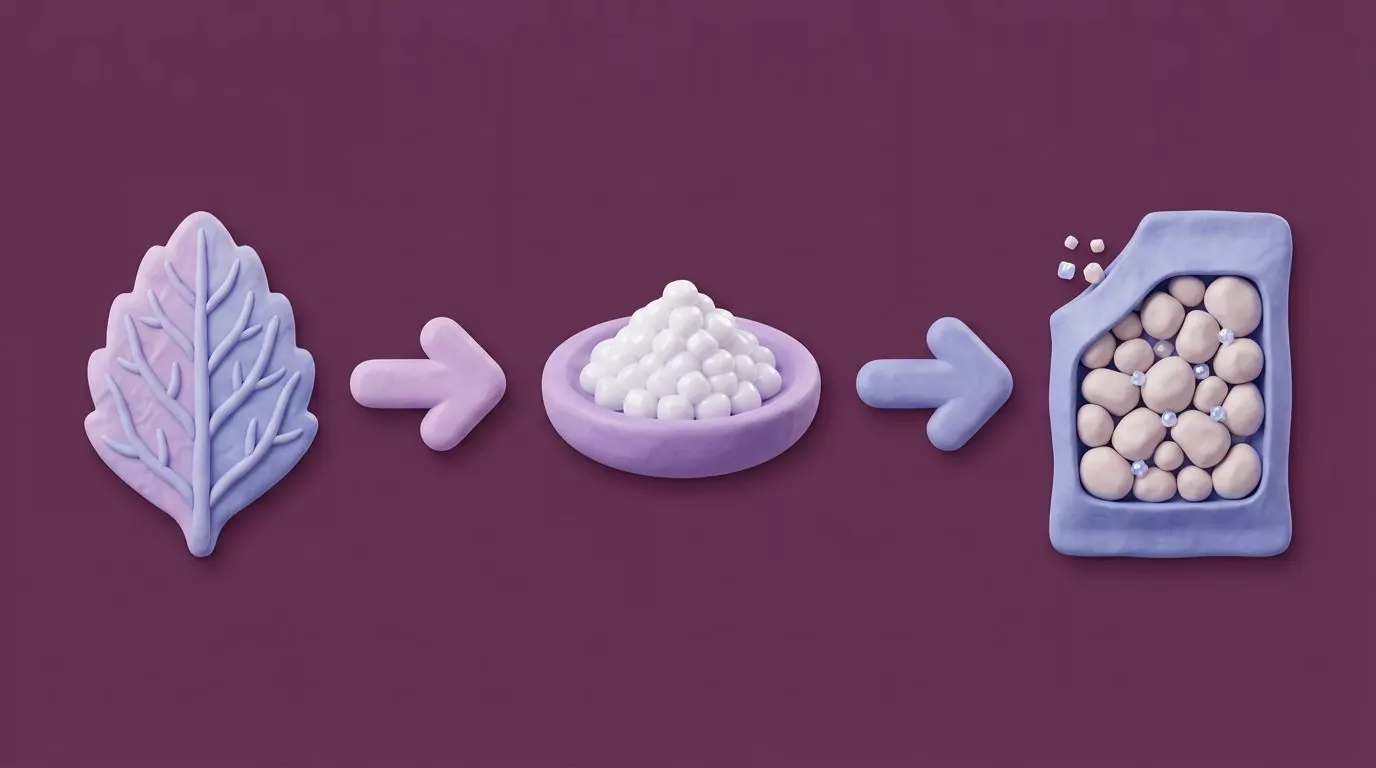
Stevia comes from the leaves of a South American plant called Stevia rebaudiana. The leaves hold sweet compounds known as steviol glycosides. Those compounds are the real sweetener.
They are intensely sweet. The FDA puts them at 200 to 400 times sweeter than table sugar. A tiny amount does the job of a spoonful.
Three different products get sold under the word stevia. Regulators do not treat them the same way, and that is the first thing to know.
Whole leaf and crude extracts
These are dried leaves or rough green extracts. In the US they are not cleared as sweeteners. The FDA states that whole leaf and crude stevia extracts fall under an import alert and are not permitted for use as sweeteners.
You may still see them sold as a herbal supplement. That is a separate legal category with a lower bar. It is not the same as the sweetener on the shelf.
Purified steviol glycosides
This is the version in your kitchen. The FDA has reviewed many safety notices for high purity steviol glycosides at 95 percent minimum purity, and has not questioned those safety conclusions. On labels it shows up as Reb A, Reb M, rebaudioside, or stevioside.
Stevia blends
Most tabletop packets are mostly not stevia. Pure steviol glycoside is so sweet that a full packet of it would be unusable. So makers pad it out with bulking agents like erythritol, dextrose, or maltodextrin.
This is the single most useful thing on this page. When a stevia product upsets someone's stomach, the filler is usually the culprit, not the stevia. Read the full ingredient list before you blame the leaf.
What Regulators Say About Stevia Sweetener Safety
Every major food safety body has looked at purified stevia. They agree on the headline.
- FDA (United States). High purity steviol glycosides are generally recognized as safe for use in food. The agency notes that several long term and clinical studies in humans showed no adverse effects.
- JECFA (the joint FAO and WHO expert committee). Set the acceptable daily intake at 4 mg per kilogram of body weight per day, measured as steviol equivalents.
- EFSA (European Union). Reached the same 4 mg figure and found no evidence of genotoxicity or cancer risk in its review.
That EFSA limit was tested again recently. In 2024 an applicant asked EFSA to raise the daily limit from 4 mg to either 6 or 16 mg per kilogram. The panel said the data was not strong enough and kept the limit at 4 mg. The ceiling held.
Turning the daily limit into real packets
An acceptable daily intake is an abstract number. The FDA does the conversion for you, and the result is worth seeing.
The FDA assumes one sweetener packet is about as sweet as two teaspoons of sugar. On that basis, a 132 pound adult would need 27 packets a day to reach the limit.
The math scales with body weight. A rough rule: about one packet per five pounds of body weight.
- 132 pounds: about 27 packets a day
- 160 pounds: about 33 packets a day
- 200 pounds: about 41 packets a day
Now flip it around, because this is the part nobody points out. Those 27 packets carry the sweetness of 54 teaspoons of sugar. That is roughly 216 grams, using the FDA's own conversion of 8 grams per two teaspoons.
The WHO ideal for free sugars is 25 grams a day. So the stevia safety ceiling sits at nearly nine times the sweetness of an entire day's sugar budget. Almost nobody eats like that. If you want your own daily sugar number in grams and teaspoons, the Daily Sugar Intake Calculator works it out from your calorie needs.

What the WHO 2023 Guidance Actually Says
This is where the internet gets loud, and where most articles get it wrong.
In May 2023 the WHO published a guideline on non-sugar sweeteners. It advises against using them to control body weight or to lower the risk of chronic disease. Stevia and stevia derivatives are named in that group.
Headlines turned this into "the WHO says stevia is dangerous." It does not say that. Four details change the meaning.
- It is a conditional recommendation. The WHO uses that label when the evidence is not certain. Much of it comes from long term observational studies, where people who already have health issues are more likely to pick sweeteners in the first place.
- It is about benefit, not poison. The finding was that sweeteners do not help with long term body fat loss. That is a different claim from harm at normal doses.
- It excludes people with diabetes. The WHO says the advice applies to everyone except those with pre-existing diabetes.
- It excludes sugar alcohols. Erythritol and similar polyols are not covered, and neither are things like toothpaste.
The reasoning behind the guideline is the part worth keeping. Francesco Branca, who directs nutrition and food safety at the WHO, put it plainly:
NSS are not essential dietary factors and have no nutritional value. People should reduce the sweetness of the diet altogether, starting early in life, to improve their health.
Read that again. The target is not stevia. The target is sweetness itself.
Reported Stevia Side Effects and the Open Questions
Searches for stevia side effects run to nearly 15,000 a month, so people clearly have concerns. Here is what holds up and what does not.
Stomach upset, usually from the filler
Bloating, gas, and loose stools are the most common complaints. In blended products, sugar alcohols are the usual cause. Erythritol in a large single dose can do this to plenty of people.
Purified steviol glycosides behave differently. The FDA notes they are not broken down by enzymes in the upper gut and are not absorbed there. Swapping to a blend without sugar alcohols often settles the problem.
The gut bacteria question is genuinely open
A 2022 review in Microorganisms pulled together 14 studies on stevia and gut bacteria. The results pointed both ways. Some studies found greater bacterial variety. One found that stevia glycosides held back the growth of six strains of a helpful bacterium, Lactobacillus reuteri, in a lab dish.
The authors were direct about the limits. There were no randomized human trials to draw on. Mouse and human gut bacteria differ a lot. Sample sizes were small, and the doses often did not match real human intake.
So the honest answer is that we do not know yet. That is not the same as a warning, and it is not an all clear either.

What about the animal studies on stevia dangers
You will find scary headlines built on animal work. One 2020 mouse study fed stevia and sucralose to mice for up to 16 weeks and reported changes in liver and kidney markers.
Treat it as early signal, not proof. It was done in mice, not people. Animal doses often sit far above what a person eats. And it runs against the human studies that FDA and EFSA relied on. One animal paper does not overturn a body of clinical evidence, in either direction.
The habit nobody measures
This one is not a toxicity risk, and it may be the most practical. Stevia keeps your palate tuned to very sweet food. If your goal is to want less sugar over time, a sweetener that is 300 times sweeter than sugar is not obviously helping.
The video below is a good, source-cited walk through the gut health research if you want to go deeper on that specific question.
Stevia vs Sugar: A Side by Side Comparison
Most articles on this topic skip the direct comparison. Here it is, matched on equal sweetness rather than equal weight.
| Factor | Table sugar | Purified stevia |
|---|---|---|
| Calories per teaspoon of sweetness | About 16 | 0 |
| Counts toward your added sugar limit | Yes, 4.2 g per teaspoon | No |
| Sweetness strength | Baseline | 200 to 400 times sweeter |
| Effect on blood sugar | Raises it | Not absorbed in the upper gut, so no meaningful rise |
| Daily ceiling | No formal limit; WHO ideal is 25 g of free sugars | 4 mg per kg of body weight, about 27 packets at 132 lb |
| Aftertaste | None | Licorice or bitter note for many people |
| Cost | Cheaper per packet | Dearer per packet, but far less is needed |
| Tooth decay | Feeds it | Does not feed it |
| WHO advice for weight control | Cut free sugars | Conditional advice against using it for that purpose |
Read down that table and the pattern is clear. On the measurable stuff, stevia wins. On the question of whether it changes your health over years, the honest answer is that swapping alone has not been shown to.
So Should You Use Stevia? A Simple Way to Decide
Here is the framework that fits the evidence.
Stevia works well as a bridge
If you drink three regular colas a day, moving to a stevia sweetened version cuts a lot of added sugar right away. A 330 ml cola holds about 35 grams of sugar. Three of those is 105 grams, against a WHO ideal of 25.
That swap is a real win, and it is easy. The Sugar in Drinks Calculator shows what your current drinks add up to in grams and sugar cubes, which usually makes the decision for you.
Stevia works badly as a destination
The trap is treating the swap as the finish line. You end up with the same sweetness habit, just sourced differently. That is exactly what the WHO is pointing at.
The stronger play is to turn the sweetness dial down slowly. Cut the sugar in your coffee by a quarter, then wait two weeks. Your palate adjusts faster than you expect. Then cut again.
Aim for the food, not the sweetener
Most added sugar does not come from the spoon in your hand. It comes from sauces, breads, yogurts, cereals, and drinks. Trading your teaspoon for a stevia packet does nothing about any of that.
Finding lower sugar versions of the foods you already eat moves the number far more than changing sweetener. The Sugar Swap Finder is built for exactly that: it suggests lower sugar alternatives to everyday foods, rather than pushing you toward another sweetener. If you would rather start by spotting where the sugar is hiding, the Hidden Sugar Finder flags more than 70 names sugar goes by on an ingredient list.

The Bottom Line: Is Stevia Bad for You?
Purified stevia is not the villain some corners of the internet make it. Regulators on both sides of the Atlantic have looked hard and found no reason to restrict it at normal intakes. The daily ceiling is far above what anyone actually consumes.
It is also not a health food, and no serious body claims it is. It has no nutritional value. It will not make you lose weight on its own. The gut research is early and unsettled.
Use it if it helps you drink less sugar. Just do not stop there.
The clearest next step is knowing your real number. Sugar Tracker is a set of free browser tools grounded in WHO and AHA guidance, with no signup, plus Sugar Lens, an added sugar tracking app in development for iOS. Start with your personal daily sugar limit and see where you actually stand. It takes about a minute, and the number tends to be more motivating than any sweetener debate.
Frequently Asked Questions
Is stevia safe?
Purified steviol glycosides are considered safe by the FDA, EFSA, and the WHO expert committee on food additives, within the daily limit of 4 mg per kilogram of body weight. Whole leaf and crude stevia extracts are a different matter and are not permitted as sweeteners in the US.
Is stevia healthier than sugar?
It is lower in calories and does not raise blood sugar or feed tooth decay, so on those specific measures it compares well. But the WHO found no long term benefit for body weight from swapping to non-sugar sweeteners, so "healthier" is too strong. Lower in sugar is accurate. Healthier is not proven.
Does stevia have side effects?
The most reported stevia side effects are bloating, gas, and mild stomach upset. In most cases these trace back to sugar alcohols such as erythritol in blended products, not to the steviol glycosides. Some people also dislike the licorice aftertaste.
Does stevia raise blood sugar?
Purified steviol glycosides are not absorbed in the upper digestive tract, so they do not produce a meaningful rise in blood sugar. Bear in mind that blended products contain other ingredients, and dextrose or maltodextrin fillers are carbohydrates. If you manage a blood sugar condition, talk to your healthcare provider about your own situation.
How much stevia per day is OK?
The acceptable daily intake is 4 mg per kilogram of body weight per day as steviol equivalents. By the FDA's own conversion, that is about 27 packets a day for a 132 pound adult, or roughly one packet per five pounds of body weight. Typical use sits nowhere near it.
Is stevia bad for your gut?
The evidence is not settled. A 2022 review of 14 studies found mixed results, with some pointing to greater bacterial variety and one to reduced growth of a helpful strain in a lab dish. There were no randomized human trials available, so no firm conclusion can be drawn yet in either direction.