Habit Stacking: How It Works, Plus 18 Examples for Cutting Back on Sugar
Habit stacking ties a new habit to one you already do, using the formula "After I [current habit], I will [new habit]." The habit you already have becomes the cue, so you never have to remember the new one on its own. For example: after I pour my morning coffee, I will log the sugar I add.

What Is Habit Stacking?
Habit stacking is a way of building a new behavior by attaching it to something you already do without thinking. You are not adding a new slot to your day. You are hanging one small action off a routine that already runs on its own.
The formula is popularized by James Clear's Atomic Habits, which gives it as "After [current habit], I will [new habit]." The anchoring idea behind it comes from BJ Fogg's Tiny Habits work, which pairs a very small new behavior with a reliable moment you already hit every day.
Here is the sugar version. Your kettle already boils every morning. Adding "after I make my tea, I will count the teaspoons of sugar that went in" costs you nothing new to remember, because the kettle reminds you.
How Habit Stacking Relates to Implementation Intentions
An implementation intention is an if-then plan: if situation X happens, then I will do Y. Researchers have studied these for decades. A 2006 meta-analysis by Gollwitzer and Sheeran pooled 94 independent tests and found if-then plans had a positive effect on goal attainment, including by helping people start.
Habit stacking is one flavor of that plan. Implementation intentions are often written around a time or a place ("at 7pm, in my kitchen"). A stack cues off an existing habit instead, which James Clear notes is what gives the new habit a cue that already fires.
That distinction matters for sugar. "I'll cut back in the afternoons" has no trigger in it. "After I open the snack drawer, I will check the pack" fires every single time the drawer opens.
The Habit Loop: Cue, Routine, Reward
Charles Duhigg's The Power of Habit popularized the habit loop: a cue triggers a routine, and a reward makes the loop worth repeating. Once the loop is worn in, the cue does most of the work.
In a stack, your anchor habit is the cue. You are borrowing a trigger that already fires reliably rather than building one from scratch. The cue routine reward pattern is why the anchor has to be something you genuinely do, not something you wish you did.
Why Small Stacked Habits Stick
Habits form through repetition in a consistent context. Gardner, Lally and Wardle set this out plainly in the British Journal of General Practice in 2012: repeat a chosen behavior in the same context until it becomes automatic. The same cue, the same place, over and over.
A stack hands you that consistent context for free. Your coffee happens in the same kitchen at roughly the same point in the morning, every day, whether you feel motivated or not.
The size of the habit matters too. This part is reasoning rather than a research finding, but it holds up in practice: on a bad day you will skip a twenty minute task and still manage a five second one. A habit small enough to survive your worst day is a habit that keeps its streak of repetitions intact.
How to Habit Stack in 5 Steps
If you want to know how to habit stack without overthinking it, this is the whole method. Five steps, and the last one is the one most people skip.
1. List Your Daily and Weekly Routines
Write down what you already do without deciding to. Daily anchors are things like making coffee, brushing your teeth, filling a water bottle, packing lunch, and loading the dishwasher.
Weekly anchors count as long as they land on a fixed day. The grocery shop, putting the recycling out, and planning the week's meals all qualify if they happen on the same day each week.
2. Pick a Reliable Anchor
Run every candidate through the same anchor test. A good anchor sits at the same point in the routine, either daily or on a fixed weekday. It happens in the same place. And your hands are free right after it.
Drinks, the snack drawer and dessert are daily anchors, so they carry daily habits. The weekly shop only anchors a habit you want to do on shopping day. If you try to hang a daily check off a trip you make on no fixed schedule, the stack will quietly fall apart.
3. Shrink the New Habit
Make the new habit too small to skip. "Read the sugar line on the box" is small. "Research the healthiest cereal" is a project, and projects get postponed.
Logging one item is a good example of a habit at the right size. It is one action, at one moment, with a clear finish.
4. Write the Sentence Where You'll See It
Write the full sentence out: "After I [anchor], I will [new habit]." Keep both halves specific enough that someone else could tell whether you did it.
Then put the note where the anchor is. A card on the coffee machine works better than a note in an app you have to open first.
5. Add the Next Stack Only When the First Is Automatic
One at a time. Wait until the first stack runs without you thinking about it, then build the next one. Adding four stacks in one week is the fastest way to end up with none.
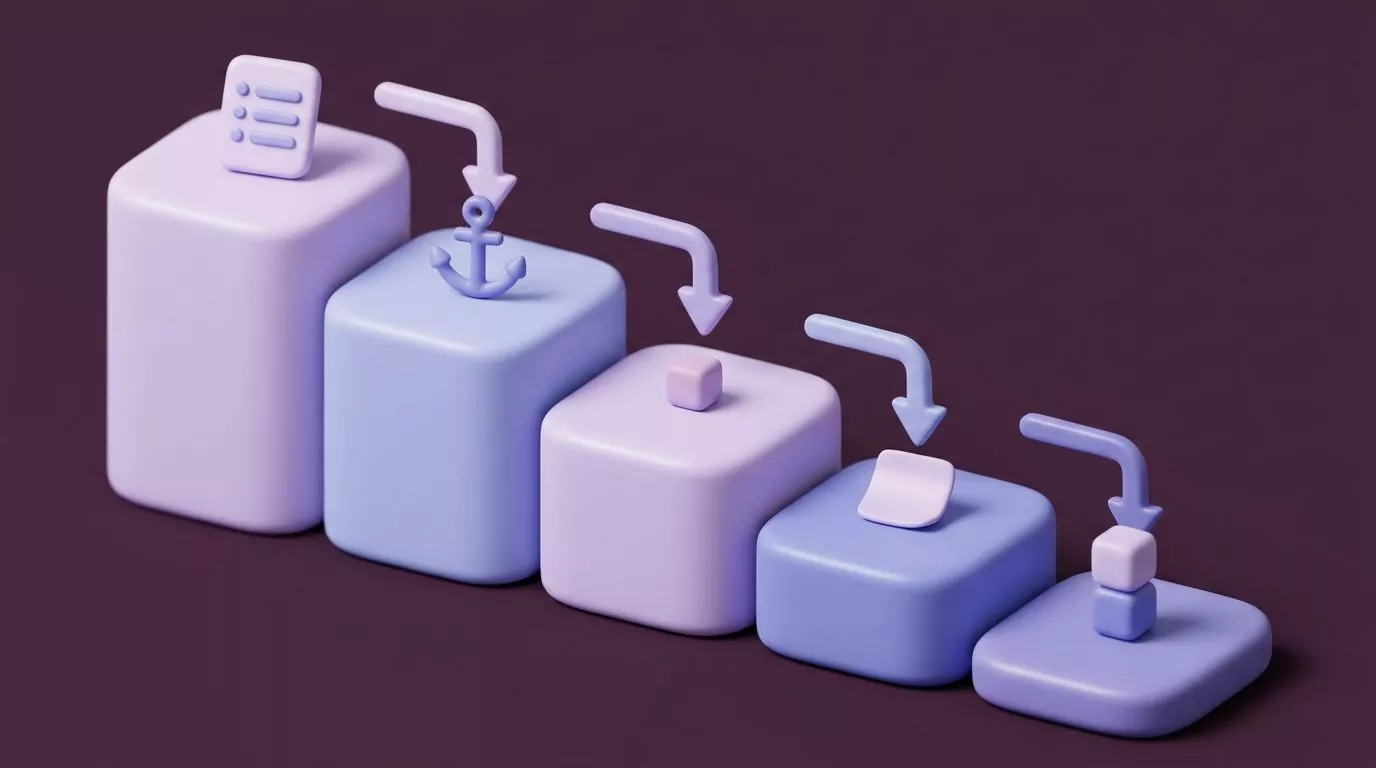
Once a stack is automatic, it can become the anchor for the next habit. That is how a chain gets built, one link at a time.
18 Habit Stacking Examples for Cutting Back on Sugar
Most habit stacking examples online are about stretching, journaling or making the bed. These are built for one job: noticing and reducing the added sugar you eat, without a diet.
Every row uses the same format, grouped by when it fires. Read them as habit stacking ideas to choose from, not a checklist. Pick one. Not four.
Morning Stacks
Mornings are the easiest place to start, because drinks and cereal are where a lot of added sugar hides and the anchors are rock solid.
| When | Anchor (After I...) | Stacked habit (I will...) | Tool |
|---|---|---|---|
| Daily | pour my coffee | log the sugar or syrup I add | Sugar Lens |
| Daily | make sweetened tea | count the teaspoons that went in (1 tsp is about 4.2 g) | Grams to Teaspoons Converter |
| Daily | pour my cereal | check the sugar per serving on the box | Sugar in breakfast cereal |
| Daily | fill my water bottle | stand it where my soda usually sits | How to stop drinking soda |
| Daily | pack my lunch | add an unsweetened drink to the bag |
The coffee row says sugar or syrup on purpose. Non-nutritive sweeteners such as stevia are not added sugar, so they do not belong in this count.
Shopping and Kitchen Stacks
These only work on a regular shopping day, which is exactly what the anchor test asks for. One note on labels first. US Nutrition Facts panels on packaged foods show Total Sugars per serving plus a separate line that reads "Includes Xg Added Sugars", according to the FDA. That second line is the one you want.
| When | Anchor (After I...) | Stacked habit (I will...) | Tool |
|---|---|---|---|
| Shopping day | put a packaged snack in the cart | paste its ingredient list and see what is added sugar | Hidden Sugar Finder |
| Shopping day | put a yogurt or cereal bar in the cart | read the Added Sugars line, not just Total Sugars | |
| Weekly | write my shopping list | pick one lower sugar swap for the week | |
| Shopping day | put the groceries away | put treats on a high shelf, not at eye level |
Workday Stacks
Bought food is where most people lose track, because nothing arrives with a label. These stacks put the check right where the purchase happens.
| When | Anchor (After I...) | Stacked habit (I will...) | Tool |
|---|---|---|---|
| Daily | sit down with lunch | photograph my plate and confirm the estimate | Sugar Lens |
| Daily | buy a cafe drink | log it and confirm it before the first sip | Sugar Lens |
| Daily | start my break | drink water before anything else | |
| Daily | pick up an unlabelled snack | look it up before I buy it | Sugar in Food Checker |
Evening and Weekly Stacks
Evening stacks work because you finally have a number to compare against a limit. The WHO recommends keeping free sugars, meaning added sugars plus those in honey, syrups and fruit juice, under 10 percent of your energy and ideally under 5 percent. At 2,000 calories that is about 50 g and about 25 g. The AHA sets its added sugar limits at 25 g a day for women and 36 g for men, and you can work out your own number from your calorie needs.
| When | Anchor (After I...) | Stacked habit (I will...) | Tool |
|---|---|---|---|
| Daily | load the dishwasher | compare today's total with my limit | Sugar Lens or the printed sheet |
| Daily | finish dinner | put dessert on a plate instead of eating from the pack | |
| Daily | brush my teeth | write today's total on the sheet | Free Printable Sugar Log |
| Weekly | put the recycling out | count the soda cans in it | |
| Weekly | plan next week's meals | find one pattern in last week's printed grid |
Why Logging Fits a Habit Stack
Logging is unusually well suited to stacking, for a boring structural reason. Meals and drinks already happen at fixed points in your day, so the anchors are handed to you. A food journal fails when you have to remember it; it works when the meal itself is the reminder.
One log entry also passes the shrink test in step 3. It is a single action with a clear end, not an open-ended task.
On the evidence: self-monitoring of behavior is a named technique in the Michie et al. 2013 behavior change technique taxonomy, which catalogues 93 techniques. That taxonomy defines the technique; it is not itself proof that it works.
For that, a 2009 meta-regression by Michie and colleagues in Health Psychology looked at 122 evaluations of healthy eating and physical activity interventions and found that self-monitoring plus at least one other self-regulation technique was associated with larger effects than other interventions. That is an association across intervention studies, not a promise about your week.
Whichever you use, a paper sheet or an app, the rule from step 5 still applies. Get one logging stack running on its own before you add a second.
How Long Does It Take to Form a Habit?
You have probably heard 21 days. That number has no good study behind it, and plenty of habit articles still repeat it.
The most cited real study is Lally and colleagues, published in the European Journal of Social Psychology in 2010. Ninety six volunteers picked one eating, drinking or activity behavior to do daily in the same context, and rated it for 12 weeks. The modelled median time to reach automaticity was 66 days.
The spread is the part worth keeping. Individual estimates ran from 18 days to 254 days, a difference of roughly fourteen times. Sixty six days is a median, not a rule, and it came from the subset of participants whose data fitted the curve.
One more finding from the same study is worth holding on to. Missing a single opportunity did not materially disrupt the habit that was forming. One skipped day is not a reset.

When a Habit Stack Doesn't Stick
When a stack fails, the design is usually at fault, not you. Four failure modes cover almost every case, and each one has a fix.
- The anchor is vague. "In the afternoon" is not an anchor. "After I open the snack drawer" is. If you cannot point to the exact moment, there is nothing to attach to.
- The habit is too big. "Plan a week of low sugar meals" will not survive a bad Tuesday. Cut it down until it fits the worst day you expect.
- The anchor is irregular. Office cake, a colleague's birthday, a weekend trip. These fire at random, so they cannot build a repetition streak. Anchor to something on your own schedule instead.
- Too many stacks at once. Four new habits in one week is four things to remember, which defeats the point. Run one until it is automatic.
If the hard part is the craving rather than the cue, the stack is not your problem. Work on the craving itself first, and expect the first week or two to be the rough part.
Redesigning a stack is normal. Rewrite the sentence, pick a steadier anchor, make the habit smaller, and try again.
Frequently Asked Questions
Is habit stacking scientifically proven?
Not as a branded method. The evidence checked here covers its two components: if-then implementation intentions, which Gollwitzer and Sheeran's 2006 meta-analysis found improved goal attainment, and same-context repetition, which Gardner, Lally and Wardle describe as the route to automaticity. No trial comparing habit stacking against other cueing methods was confirmed for this article, so treat it as a sensible application of established findings rather than a proven system.
Can habit stacking help break an unwanted habit?
Stacking adds a behavior, so it does not delete one directly. What works is stacking a replacement or a pause right after the usual cue: after I open the snack drawer, I will drink a glass of water first. The cue still fires, but what follows it changes.
What's the difference between habit stacking and temptation bundling?
Stacking cues a new habit off something you already do. Temptation bundling pairs something you enjoy with something you keep putting off. Milkman, Minson and Volpp tested bundling in Management Science in 2014 by restricting tempting audiobooks to the gym, and gym visits rose at first, though the effect faded over the study. If you try bundling for sugar habits, pair the task with a podcast or a show, not with a sweet treat.
Can you chain several habits into one stack?
Yes, but build the chain one link at a time. Keep it to one new habit per anchor until that habit is automatic, then let it become the cue for the next one. That is step 5, and skipping it is the most common reason long stacks collapse.
Start With One Stack
Pick the single moment where most of your added sugar shows up. For most people that is a drink. Write one sentence, put it where the anchor is, and leave the other 17 ideas alone until that one runs itself.
If you want the logging half handled for you, Sugar Lens is on the App Store now for iPhone and is free to download, listed as Sugar Tracker: Food Scanner. You photograph your food, it estimates the added sugar in grams, and you review and confirm every entry before it saves. Manual entry is there for when you already know the number, your log stays on your device, and there is no Android version yet.
This article is general information, not medical advice. If you have diabetes or another condition, follow the numbers your clinician gives you.