How Much Sugar Is in Milk? Dairy, Oat, Almond and Soy Compared
Yes, milk has sugar: one cup (8 oz, about 240 ml) of plain cow's milk has about 12 g, whether it's whole, 2%, 1% or skim. All of it is natural lactose, so it isn't added sugar (FDA) or free sugar (WHO). Unsweetened almond and soy drinks run about 0 to 1 g, oat drinks vary by brand, and sweetened versions add more. Dairy figures come from USDA FoodData Central.
How Much Sugar Is in Milk? The Numbers by Type
Here is the short version, per cup. Dairy rows use USDA FoodData Central (SR Legacy). Plant rows use the named brand's current US label, because plant milks vary a lot from brand to brand. Teaspoons use 4.2 g per teaspoon.
| Milk (1 cup) | Total sugars | Added sugars | Teaspoons (total) | Where the sugar comes from |
|---|---|---|---|---|
| Whole milk, 3.25% (USDA) | 12.3 g | 0 g | 2.9 | Lactose |
| 2% reduced fat milk (USDA) | 12.3 g | 0 g | 2.9 | Lactose |
| 1% lowfat milk (USDA) | 12.7 g | 0 g | 3.0 | Lactose |
| Skim milk (USDA) | 12.5 g | 0 g | 3.0 | Lactose |
| Lactaid Whole Milk (lactose-free) | 12 g | 0 g | 2.9 | Lactose split into glucose and galactose |
| Silk Unsweet Almondmilk | 0 g | 0 g | 0 | None |
| Silk Original Almondmilk | 7 g | 7 g | 1.7 | Added cane sugar |
| Silk Unsweet Soymilk | 1 g | 0 g | 0.2 | Soybeans |
| Silk Original Soymilk | 5 g | 4 g | 1.2 | Mostly added cane sugar |
| Oatly Unsweetened Oatmilk | 0 g | 0 g | 0 | None |
| Oatly The Original Oatmilk | 7 g | 7 g | 1.7 | Oat starch broken down in processing |
| So Delicious Organic Unsweetened Coconutmilk | 0 g | 0 g | 0 | None |
| TruMoo 1% Lowfat Chocolate Milk | 22 g | 10 g | 5.2 | Lactose plus added sugar |
Fat level doesn't change lactose, so skim isn't lower in sugar than whole. Rounded, any plain cow's milk has about 12 g a cup (USDA entries run 12 to 13 g).
Why Skim and Whole Milk Have the Same Sugar
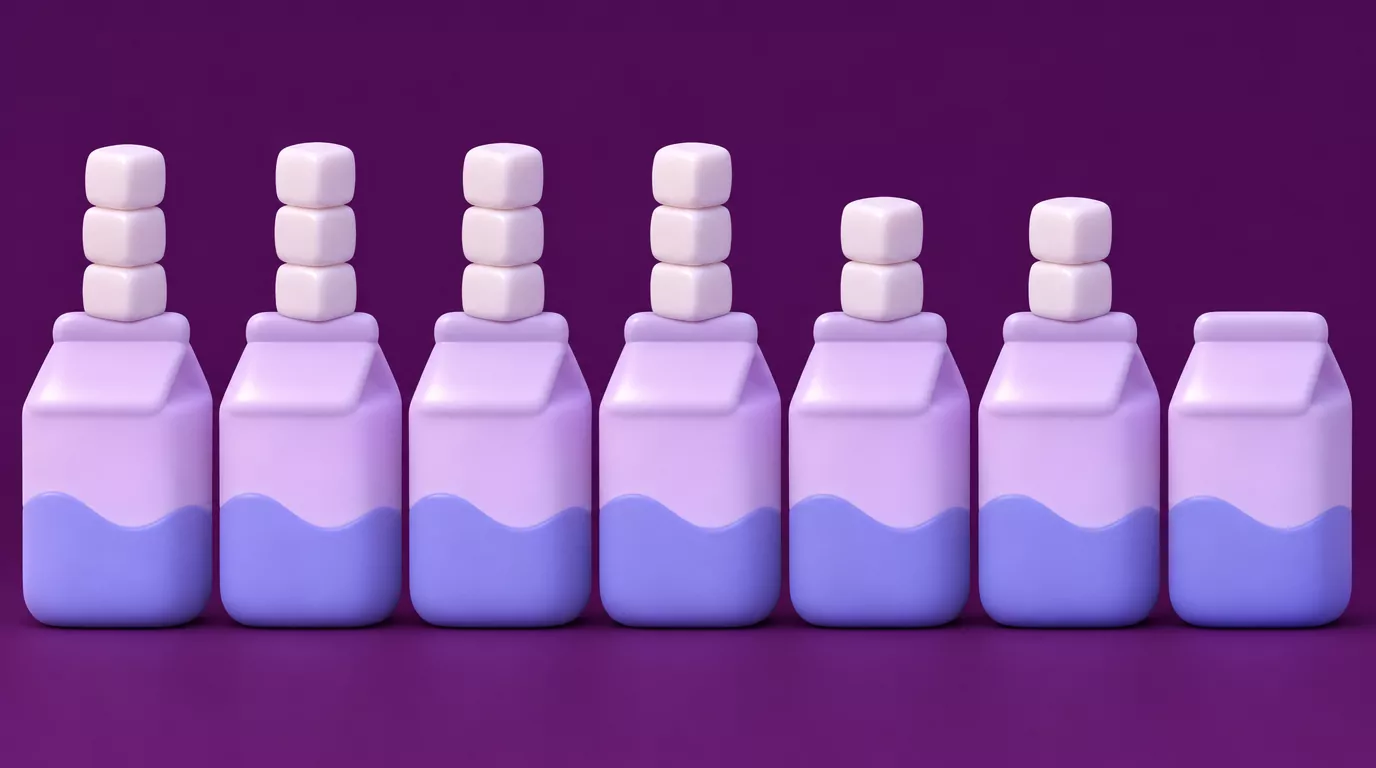
Skimming takes fat out of milk. It doesn't touch the lactose, which sits in the watery part. That's why whole and 2% both land at 12.3 g a cup in USDA data.
Skim can even read a hair higher, at 12.5 g. With the fat gone, a cup holds slightly more of the liquid that carries lactose. The gap is a fraction of a gram, so treat every plain dairy milk as about 12 g.
Per 100 ml, for Labels Outside the US
UK and Australian cartons list sugar per 100 ml, not per cup. Plain cow's milk usually reads about 4.7 to 5 g per 100 ml. To get a cup, multiply by 2.4, which gives roughly 11 to 12 g.
Does Milk Have Sugar That Counts as Added Sugar?
Does milk have sugar? Yes, but plain milk has no added sugar. Lactose is a sugar that's naturally present in milk, and the label rules treat it that way.
The FDA's guide to added sugars says total sugars include the sugar naturally found in milk, while added sugars don't. The FDA's Daily Value for added sugars is 50 g a day on a 2,000 calorie diet. Plain milk adds nothing to that number.
The WHO uses a different term, "free sugars". In plain words, that's sugar added to food plus the sugar in honey, syrups and fruit juice. The WHO sugars guideline leaves out sugars naturally present in milk, and the NHS guide to sugar says the same.
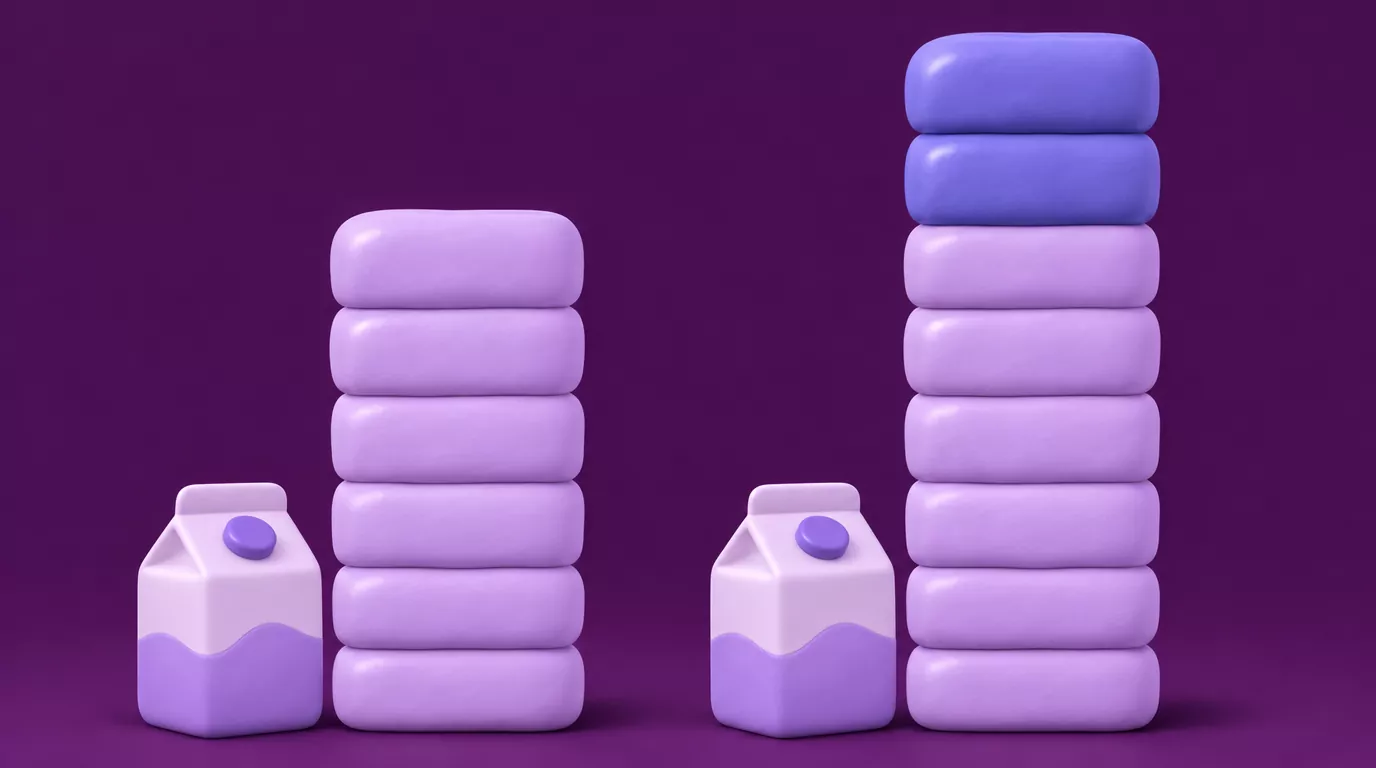
Here's how to read a carton in two lines. The Total Sugars line on plain milk will say about 12 g. The indented line under it, "Includes 0g Added Sugars", is the one that counts toward a daily limit. Our guide to total sugars vs added sugars walks through the full panel, and what counts as added sugar covers the definitions.
That lactose also comes with other nutrients. A cup of plain milk has about 8 g of protein, plus calcium and, in most US milk, added vitamin D.
Why Lactose-Free Milk Tastes Sweeter
Lactose-free milk has the enzyme lactase added. It splits lactose into two smaller sugars, glucose and galactose, which taste sweeter on the tongue.
Nothing is added, though. Lactaid Whole Milk still lists 12 g of total sugars and 0 g of added sugars a cup, the same as regular whole milk.
Plant Milks: Where Added Sugar Actually Shows Up
The real added sugar in the milk aisle sits in plant milks labeled "original", "vanilla" or "barista". The unsweetened versions are the lowest in sugar of anything on the shelf, often 0 to 1 g a cup. The word "original" usually means sweetened.
Here's a worked example. Silk Original Almondmilk lists 7 g of added sugar per cup. That's 7 / 4.2 = 1.7 teaspoons, about 28% of the AHA's under 25 g a day for kids, or 14% of the FDA's 50 g Daily Value.
Almond Milk
Silk Unsweet Almondmilk lists 0 g of total and added sugars per cup. Silk Original Almondmilk lists 7 g of each, and its ingredient list names cane sugar second, right after the almondmilk. So how much sugar is in almond milk comes down to one word on the carton.
Soy Milk
Silk Unsweet Soymilk lists 1 g of total sugars and 0 g added, with 8 g of protein. Silk Original Soymilk lists 5 g total and 4 g added. That's still less added sugar than the original almond version, but it isn't zero.
Oat Milk
Oat drinks are the tricky ones. Oats are mostly starch, and makers use enzymes to break that starch into sugars such as maltose. That's what makes oat milk taste sweet even with no sugar in the ingredient list.
Labels report this sugar in different ways, so read both lines exactly as printed. US cartons of Oatly The Original Oatmilk list 7 g of total sugars and "Includes 7g Added Sugars" per cup. Oatly Unsweetened Oatmilk, a newer recipe, lists 0 g of sugar. Compare the Total Sugars line across brands, since that's the number that stays consistent from label to label.
Rice and Coconut Drinks
Rice drinks run among the highest plant milks for total sugars, for the same starch reason as oats. Rice Dream Original Classic shows about 11 g of total sugars per cup on retailer labels, close to plain cow's milk. Unsweetened coconut drinks sit near zero: So Delicious Organic Unsweetened Coconutmilk lists 0 g.
Milk for Kids: What the Guidelines Say
The American Heart Association advises less than 25 g of added sugar a day for kids aged 2 to 18. For children under 2, it advises no added sugar at all. Plain milk's lactose doesn't count toward that number. Flavored and sweetened milks do.
For chocolate milk, current labels put about 10 to 11 g of added sugar in an 8 fl oz serving, on top of the lactose. That's close to half a child's daily limit in one carton. Our look at whether chocolate milk is healthy compares the big brands.
The NHS guide to drinks for young children adds a few age rules:
- Whole or semi-skimmed cow's milk can be a main drink from 12 months.
- Unsweetened, calcium-fortified plant drinks such as soya, oat or almond can be given from age 1 as part of a balanced diet.
- Children under 5 shouldn't have rice drinks, because of arsenic levels.
If your child has an allergy or a medical condition, follow your pediatrician's advice. For limits by age, see sugar intake by age. Try the Kids' Sugar Intake Calculator; it runs in your browser, no signup.
How to Pick a Lower-Sugar Milk in 30 Seconds
- Read the "Includes Xg Added Sugars" line, not Total Sugars. On plain dairy milk it reads 0 g.
- Look for "unsweetened" on the front. "Original" usually means sweetened, and "no added sugar" can still mean several grams of natural sugar.
- Watch the barista and vanilla versions you pour into coffee. A few cups a day adds up.
- For cereal, count the milk's added sugar together with the bowl's. Our sugar in breakfast cereal guide has the numbers.
- Turn grams into teaspoons with the Sugar Grams to Teaspoons Converter.
Want a lower-sugar pick for a sweetened milk you already buy? The Sugar Swap Finder shows the grams you'd save. Holding a carton with a per 100 ml label? The Food Label Sugar Decoder turns it into a rating and per-serving math.
Frequently Asked Questions
Does Milk Count as Natural Sugar?
Yes. The sugar in plain milk is lactose, which is naturally present. The FDA doesn't count it as added sugar, and the WHO doesn't count it as free sugar.
Does 2 Percent Milk Have a Lot of Sugar?
A cup of 2% milk has about 12 g of sugar, the same as whole and skim. All of it is lactose, and the added sugars line reads 0 g.
Is the Sugar in Milk Bad for You?
Sugar guidelines from the WHO and AHA target added and free sugars, not the lactose in plain milk. Sweetened and flavored milks are where added sugar comes in. If you're managing a health condition, follow your clinician's advice on milk.
Which Milk Is Lowest in Sugar?
Unsweetened almond, coconut and soy drinks, plus some unsweetened oat drinks, are the milks with the least sugar. Silk Unsweet Almondmilk, Oatly Unsweetened Oatmilk and So Delicious Organic Unsweetened Coconutmilk all list 0 g, and Silk Unsweet Soymilk lists 1 g.
How Many Grams of Sugar Should You Have per Day?
For added sugar, the WHO advises under 10% of daily energy, and ideally under 5% (about 25 g). The AHA advises up to 25 g for women, 36 g for men and under 25 g for kids aged 2 to 18. Our guide to how much sugar per day explains both, and the Daily Sugar Intake Calculator works out your own number.
Tracking the Milk Sugar That Slips Past
A sweetened oat latte or a bowl of cereal with vanilla almond milk is exactly where added sugar slips past. With Sugar Tracker: Food Scanner, you snap a photo, review the AI estimate (it shows a range and a confidence), adjust or confirm it, and see your daily total. For a packaged carton, you can add an optional photo of the nutrition label, or type the grams from the Added Sugars line yourself. Your log stays on your iPhone.
Sugar Tracker: Food Scanner is free to download on the App Store for iPhone (iOS 15.1 or later). There is no Android version yet. Android readers can use the free browser tools instead.