Sugar Rush: Does Sugar Really Make Kids Hyper?
Does sugar make you hyper? Not in blinded studies, where neither children, parents nor researchers knew who got sugar. A 1995 JAMA meta-analysis of 23 such studies found no effect on behavior. The "rush" parents see more likely comes from the party and the expectation. The real issue is grams: one 330 ml cola tops the AHA's 25 g limit for kids.
Here are the three studies behind that answer, why kids still seem wired after cake, and a party plate in grams of added sugar.

What People Mean by a "Sugar Rush"
A sugar rush is the everyday idea that sweets make a child (or an adult) suddenly wired. Think running, shouting, giggling and not being able to settle, often followed by a meltdown.
It's a popular phrase, not a medical term or a diagnosis. The idea took hold with the 1970s Feingold diet, whose small, poorly controlled studies blamed sugar, food colors and other additives.
The sugar rush symptoms people usually describe are about behavior. Shakiness, sweating, confusion or a racing heart are not a "rush," and they're a reason to call a doctor.
Does Sugar Make You Hyper? What Blinded Studies Found
The strongest tests hide who got sugar, because a parent who knows will watch differently. Those tests keep finding no effect on children's behavior. Studies in adults point the same way.
23 Studies, No Effect on Behavior
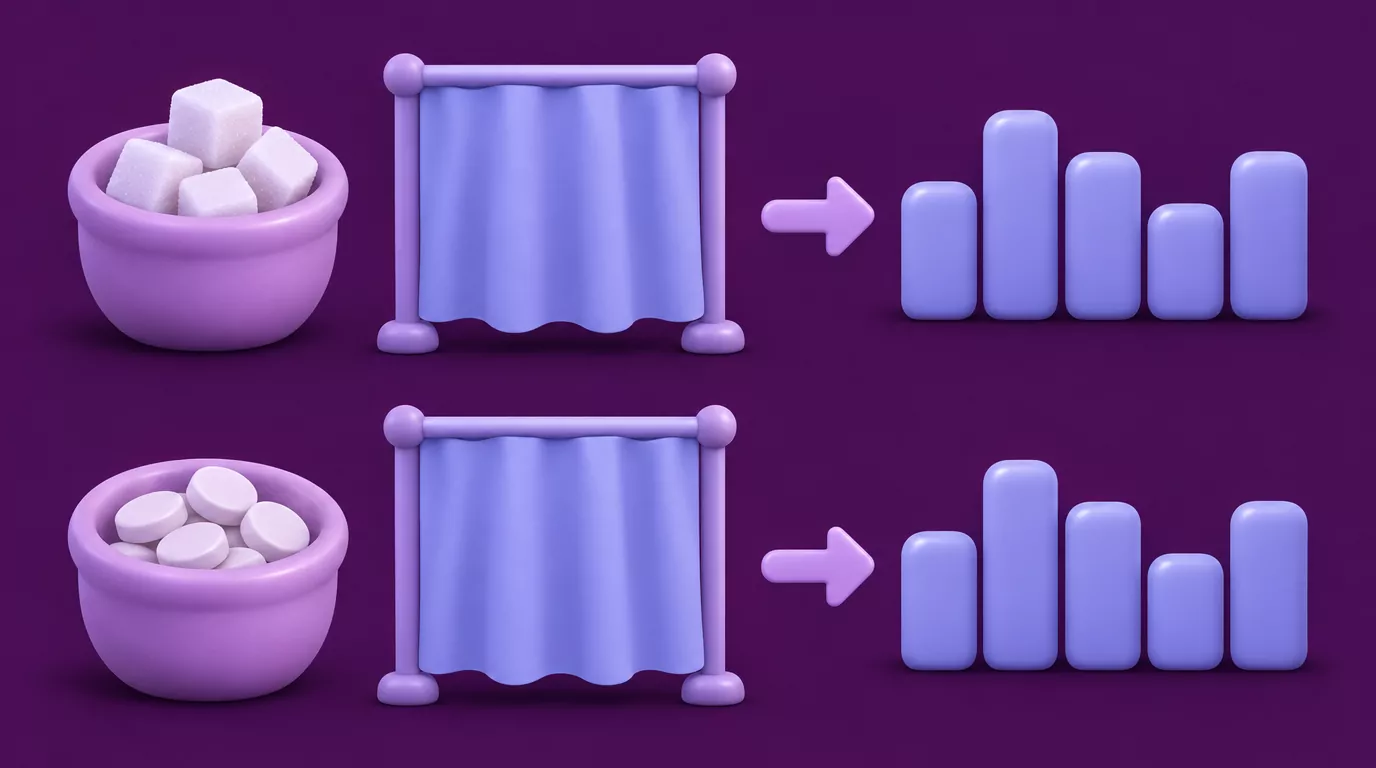
In 1995, Wolraich, Wilson and White pooled the research on sugar and hyperactivity in a JAMA meta-analysis. They found 16 reports covering 23 studies. Each one gave children a known amount of sugar, compared it with a placebo sweetened artificially, and kept the children, parents and research staff blind.
Across 14 measures of behavior and thinking, none showed a reliable effect. In plain terms, every result sat close enough to zero that chance could explain it. The authors added one caveat: a small effect, or an effect in some children, can't be ruled out.
Three Weeks of High-Sugar Eating, No Change
A double-blind 1994 New England Journal of Medicine trial followed 25 preschoolers aged 3 to 5, plus 23 children aged 6 to 10 whose parents described them as sensitive to sugar. Each family spent three weeks on each of three diets: one high in sugar, one sweetened with aspartame, and one sweetened with saccharin as the placebo.
All three diets were essentially free of additives and food dyes. For the "sugar-sensitive" children, none of 39 behavior and thinking measures differed between the diets. For the preschoolers, 4 of 31 measures differed, with no consistent pattern. The authors concluded that even when children ate more sugar than usual, it didn't affect their behavior or thinking.
The Experiment Where No Child Got Sugar
The most telling study gave sugar to nobody. In Hoover and Milich's 1994 study, 35 boys aged 5 to 7, all described by their mothers as "sugar sensitive," drank a placebo sweetened with aspartame. Some mothers were told their son had just had a large dose of sugar, and the rest were told he'd had a placebo.
The mothers expecting sugar rated their sons as significantly more hyperactive. On video, they also stayed physically closer and tended to criticize, watch and talk to their sons more.
Why Kids Seem Hyper After Sweets Anyway
Parents aren't imagining the chaos. The research suggests they're crediting the wrong cause.

The Party Is the Stimulant
Sweets show up at birthdays, holidays, sleepovers and school events, along with crowds, games, late bedtimes and broken routines. MedlinePlus notes that how active a child seems depends on age, interest and the situation: busy on a playground is fine, while the same energy late at night reads as a problem.
We See What We Expect
The 1995 meta-analysis authors suggested that parents' strong belief may come from expectation and common association. Sweets and exciting events show up together, so the sweets take the blame. The Hoover and Milich study shows how strong that pull is: being told "sugar" was enough to change what mothers saw.
Caffeine and Food Colors Ride Along
Some sodas, iced teas, chocolate and energy drinks contain caffeine, which is a real stimulant. Separately, a 2007 Lancet trial of 153 three-year-olds and 144 children aged 8 to 9 tested drinks with artificial food color mixes plus the preservative sodium benzoate. Those drinks slightly raised hyperactivity scores compared with a placebo drink.
That effect was about those additives, not sugar.
What the Research Can't Rule Out
MedlinePlus says refined sugar may affect children's activity because it raises blood sugar quickly. But the blinded trials measured behavior directly and found no change. The Conversation suggests some of the buzz is excitement about the treat, a reward response.
Most trials are small, short and from the 1980s and 1990s. A 2025 Guardian explainer notes that the limited links found so far are mostly in children already diagnosed with ADHD, with sweet drinks that also hold caffeine and additives, so sugar is hard to isolate. In the same piece, nutrition researcher Amanda Avery of the University of Nottingham says there's no scientific proof yet that sugar makes us hyper.
The Real Issue Is the Grams
In its scientific statement and summary for health professionals, the AHA recommends no more than 25 g of added sugar (about 6 teaspoons) a day for children aged 2 to 18, and none under age 2. The NHS sets lower free-sugar limits for younger children.
Here's how a few party favorites stack up against that 25 g. The teaspoon math matches the Sugar Grams to Teaspoons Converter.
| Party item | Typical sugar | Teaspoons (4.2 g each) | Share of the AHA 25 g |
|---|---|---|---|
| Juice box (200 ml) | 17 g | about 4 | 68% |
| Fun-size chocolate bar | 10 g | about 2.4 | 40% |
| 2 biscuits (cookies) | 8 g | about 1.9 | 32% |
| Flavored yogurt tube | 6 g | about 1.4 | 24% |
| 330 ml can of cola | about 35 g | about 8.3 | 140% |
Typical label figures from the Kids' Sugar Intake Calculator, plus the site's 330 ml cola figure. Brands vary, so check the label. Juice sugar counts as free sugar under WHO and NHS guidance, even though 100% juice shows 0 g on the US Added Sugars line.
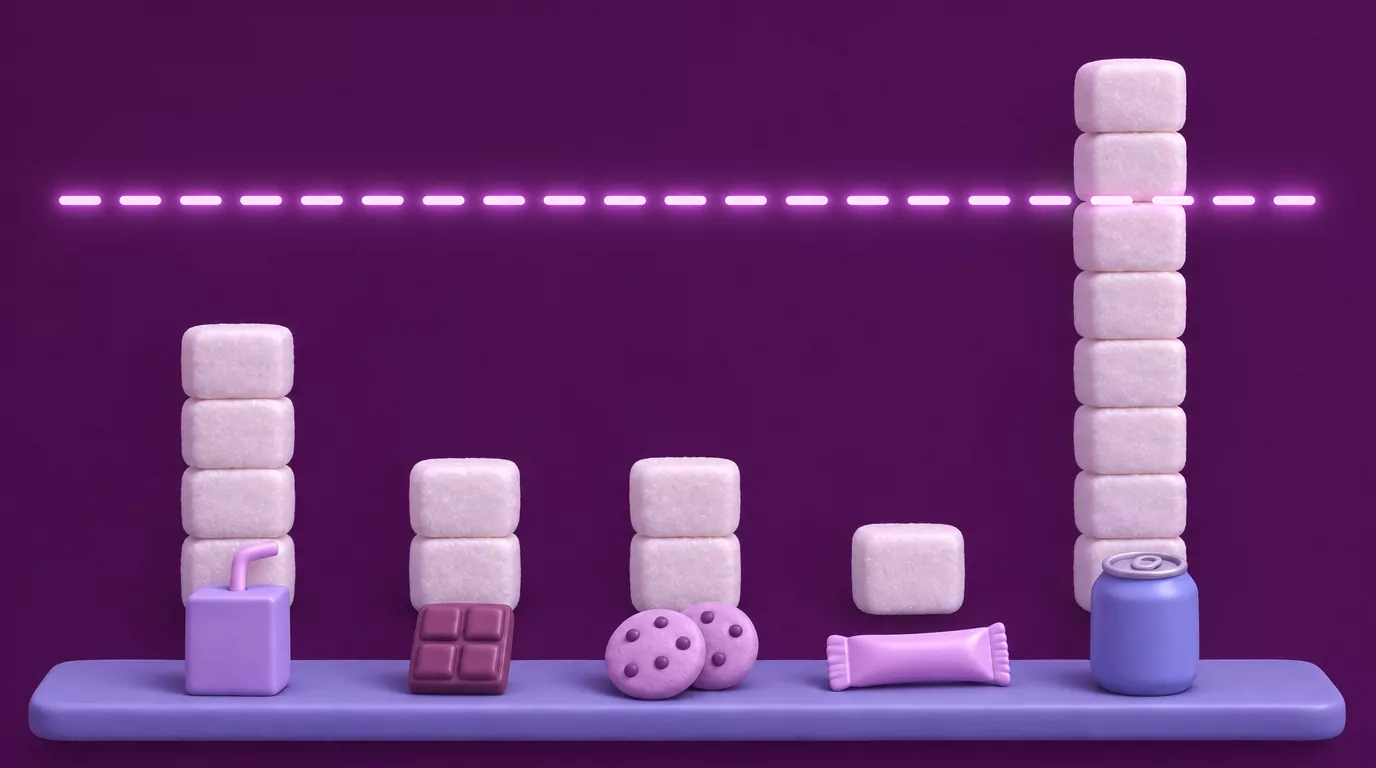
Now add up one party. A juice box plus two fun-size bars is 37 g, close to 9 teaspoons and about one and a half times the AHA limit, before anyone cuts the cake. For cake, candy or ice cream, look the item up in the Sugar in Food Checker rather than guessing.
MedlinePlus notes that a diet high in sugar is a major cause of tooth decay, and that sugary foods can crowd out more nutritious ones. The WHO's 2015 sugars guideline also cites tooth decay as a reason to cut back.
For the full limits at every age, plus help planning parties and holidays, see the guide to sugar intake by age.
A Calm Plan for Party and Holiday Days
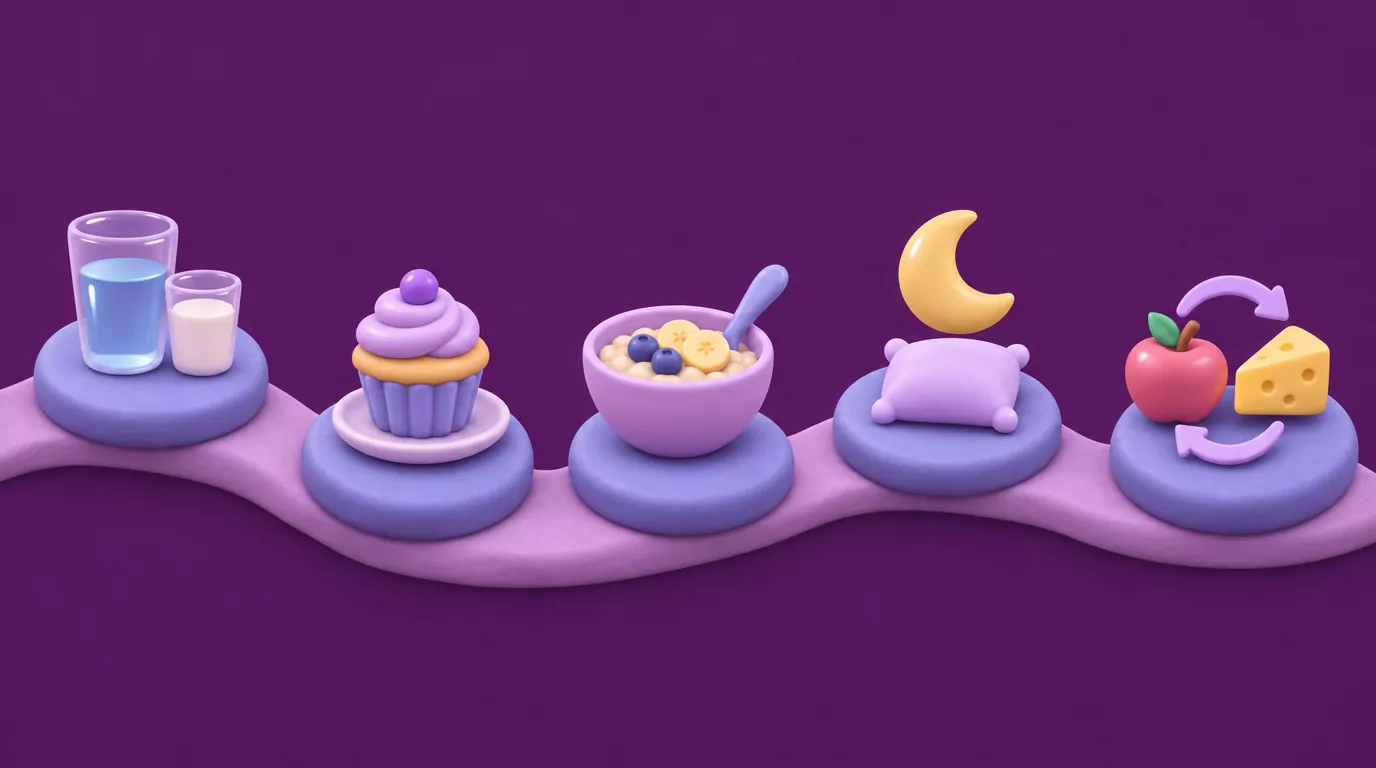
No sugar police needed. These five habits trim grams and calm what drives "hyper" moments: the setting, tiredness and expectations.
1. Put Water and Plain Milk on the Party Table
Water or plain milk in place of a 200 ml juice box saves about 17 g, most of a child's daily limit. For soda, see how much sugar is in a can of Coke, and for flavored milk, see whether chocolate milk is healthy. The Sugar in Drinks Calculator totals a day's drinks in grams, teaspoons and sugar cubes.
2. Let Them Pick One Treat
Choosing one favorite beats grazing the whole table. One fun-size bar is 10 g, while a bar, a juice box and two cookies add up to 35 g. Letting them pick also keeps sweets from becoming a fight.
3. Keep the Rest of the Day Ordinary
Breakfast and lunchbox foods are where hidden sugar adds up before the party even starts. Sugar in breakfast cereal is a common surprise. On packs, read the added sugars line, not just total sugars.
4. Protect Bedtime and Wind-Down Time
MedlinePlus suggests giving children quiet time so they can learn to calm themselves. A tired child at 9 pm looks "hyper" whatever they ate, so a calm half hour after the party is worth protecting.
5. Use Swaps, Not Bans
The Sugar Swap Finder suggests lower-sugar options and shows the grams you save. One scoop of ice cream instead of two, for example, saves about 10 g, and nobody has to skip dessert.
When to Talk to Your Pediatrician
MedlinePlus suggests talking to your child's provider if your child can't sit still when other children their age can, or can't control impulses. If anything else about your child's behavior worries you, ask their pediatrician.
If a child has diabetes or any condition affected by sugar, follow their care team's plan, not this article.
Frequently Asked Questions
Are sugar rushes real?
In blinded studies, sugar didn't change children's behavior or thinking. What people call a rush is mostly the setting and the expectation. The sugar rush myth lasts because parties, sweets and excitement so often arrive together.
What does sugar rush mean?
It's an everyday phrase for a burst of energy or excitement blamed on sweets. People also use it loosely for any excited buzz. It isn't a medical term.
How long does a sugar rush last?
Blinded trials in children didn't find a sugar "rush," so there's nothing to time. What parents notice tends to last as long as the excitement does.
Why does my child get hyper after eating sugar?
Usually it's the event, the expectation, tiredness and late nights, and sometimes caffeine. The sugar itself didn't change behavior in blinded trials.
How do I get rid of a sugar rush?
There's nothing to treat. Move to a calmer space, offer water and a regular meal, and keep the bedtime routine. If something seems physically wrong, call a doctor.
See Your Family's Sugar in Grams
The Kids' Sugar Intake Calculator shows the AHA and NHS daily limits for a child's age in grams and teaspoons, with snack examples that fit. It runs in your browser, no signup.
For your own added sugar through the holidays, Sugar Tracker: Food Scanner is free to download on the App Store for iPhone (iOS 15.1 or later). Snap a photo of your plate, review the AI estimate of added sugar with its range and confidence, then adjust or confirm it and see your daily total.
Manual entry of grams also works, and your log stays on your iPhone. There is no Android version yet, so Android readers can start with the browser tools.