Is Brown Sugar Healthier Than White Sugar? 6 Sugars Compared Gram for Gram
No. Brown sugar is sugar that keeps some molasses, or white sugar with molasses added back. A packed teaspoon weighs 4.6 g and carries 17 calories, against 4.2 g and 16 calories for level white. The molasses brings about 0.1% of a day's potassium and 0.3% of a day's calcium.
Is Brown Sugar Healthier Than White Sugar? Same Sugar, Different Color
In USDA FoodData Central, white granulated sugar (FDC ID 169655) is 99.8 g of sugars and 387 calories per 100 g. Brown sugar (FDC ID 168833) is 97.0 g and 380 calories.
A level teaspoon of white sugar weighs 4.2 g; a packed teaspoon of brown weighs 4.6 g. The brown spoon gives slightly more sugar and more energy, not less. For the calorie math, see how many calories are in a gram of sugar.
How Brown Sugar Is Made
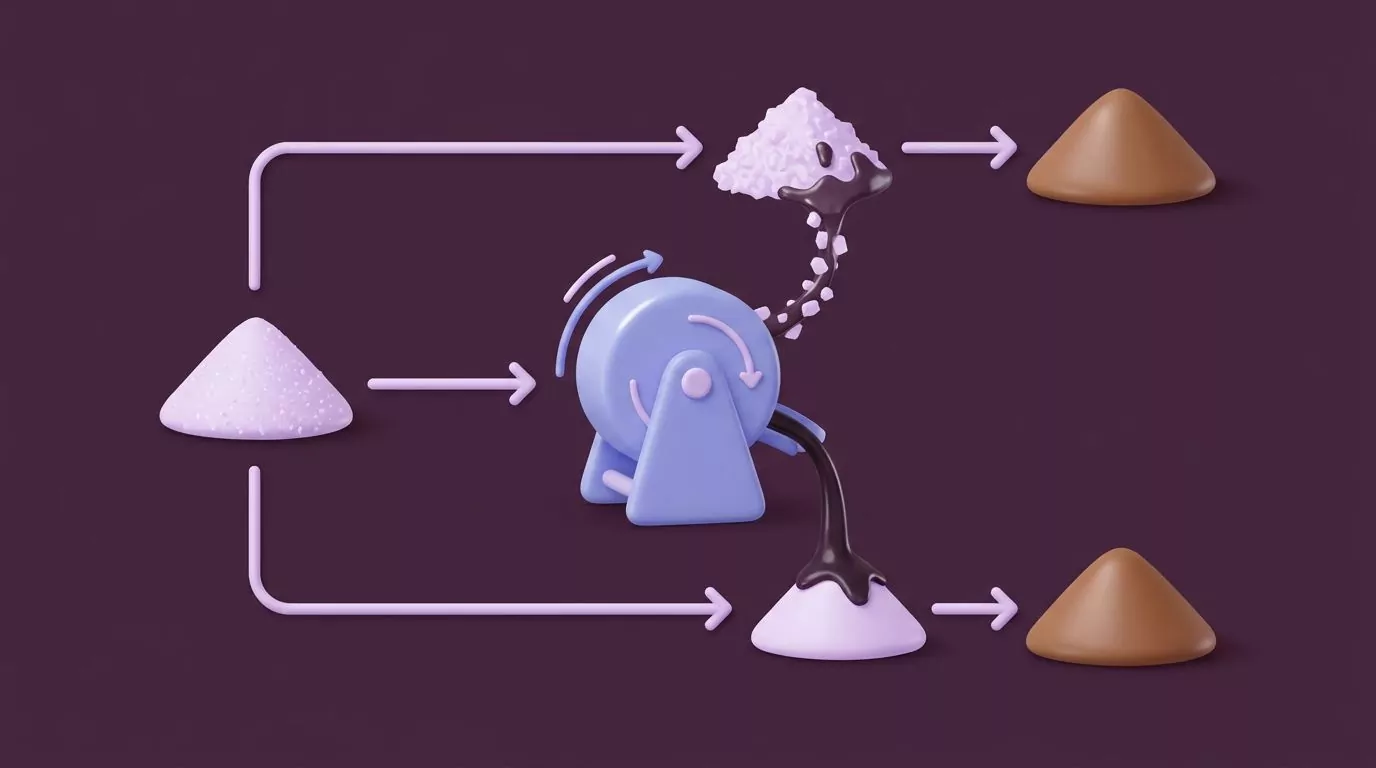
Cane juice is boiled until crystals form, and a centrifuge spins them out of the dark syrup. The syrup is molasses. What stays is refined white sugar.
Brown sugar reaches the bag two ways. The supermarket route is the one Illinois Extension describes: it starts as white sugar, then molasses goes back in. The other skips the stripping step, so some molasses stays on the crystal. It puts light brown at roughly 3.5% molasses by weight and dark brown at 6.5%. Either way it is still sugar: FoodData Central lists white at 99.8% sucrose and brown at 94.6%.
Raw, Turbinado, Cane and "Unrefined" on Labels
"Cane" names the plant, not the processing: cane sugar can be fully refined white, so the word says nothing about molasses.
Raw sugar skipped a step. UF/IFAS Extension defines it as coarse crystals from evaporated cane juice, sold as turbinado once the impurities and most of the molasses are out. Turbinado is a style of raw sugar, not its own category.
"Natural" and "unrefined" are the weakest words on the shelf. The FDA has never defined "natural" through rulemaking, and "unrefined" says as little: the sugars below still land between 87.5 g and 100 g per 100 g. Paste any ingredient list into the Hidden Sugar Finder, which highlights the 90 names sugar hides behind.
6 Sugars Compared per Teaspoon and per 100 g
Every row comes from one USDA FoodData Central entry. Rows marked "label" are branded products, with figures from the package.
| Sugar (FDC entry) | Grams per tsp | Calories per tsp | Sugars per 100 g | Calories per 100 g |
|---|---|---|---|---|
| White, granulated (169655) | 4.2 g, level | 16 | 99.8 g | 387 |
| Brown (168833) | 4.6 g, packed | 17 | 97.0 g | 380 |
| Raw / turbinado (170674) | 4.6 g | 18 | 99.2 g | 399 |
| Cane sugar (2589801, label) | 4 g | 15 | 100 g | 375 |
| Muscovado (2034101, label, filed as raw cane sugar) | 4 g | 15 | 100 g | 375 |
| Coconut (2657777, label) | 4 g | 15 | 87.5 g | 375 |
Now the minerals, against the FDA Daily Values of 4,700 mg potassium, 1,300 mg calcium and 18 mg iron.
| Sugar (FDC entry) | Potassium per 100 g | Calcium per 100 g | Iron per 100 g |
|---|---|---|---|
| White, granulated (169655) | 2 mg (0.04% DV) | 1 mg (0.08% DV) | 0.05 mg (0.3% DV) |
| Brown (168833) | 133 mg (2.8% DV) | 83 mg (6.4% DV) | 0.71 mg (3.9% DV) |
| Raw / turbinado (170674) | 29 mg (0.6% DV) | 12 mg (0.9% DV) | 0.37 mg (2.1% DV) |
| Cane sugar (2589801, label) | not listed | not listed | not listed |
| Muscovado (2034101, label, filed as raw cane sugar) | not listed | not listed | not listed |
| Coconut (2657777, label) | not listed | not listed | not listed |
Muscovado is a dark, moist brown sugar. In the three branded rows, not listed (below label rounding) means the package prints no mineral at all.
The Mineral Math
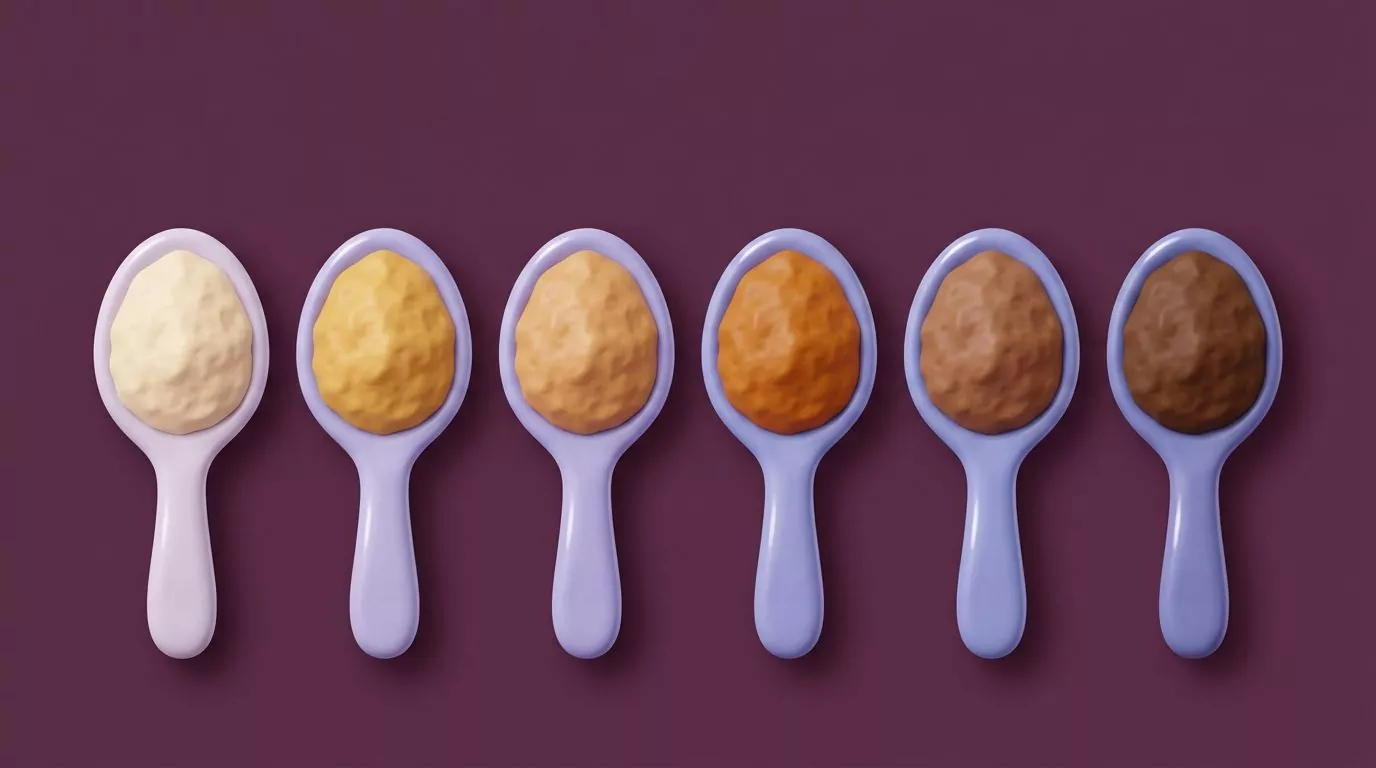
Brown sugar does hold more potassium and calcium than white. The question is how much lands in a teaspoon.
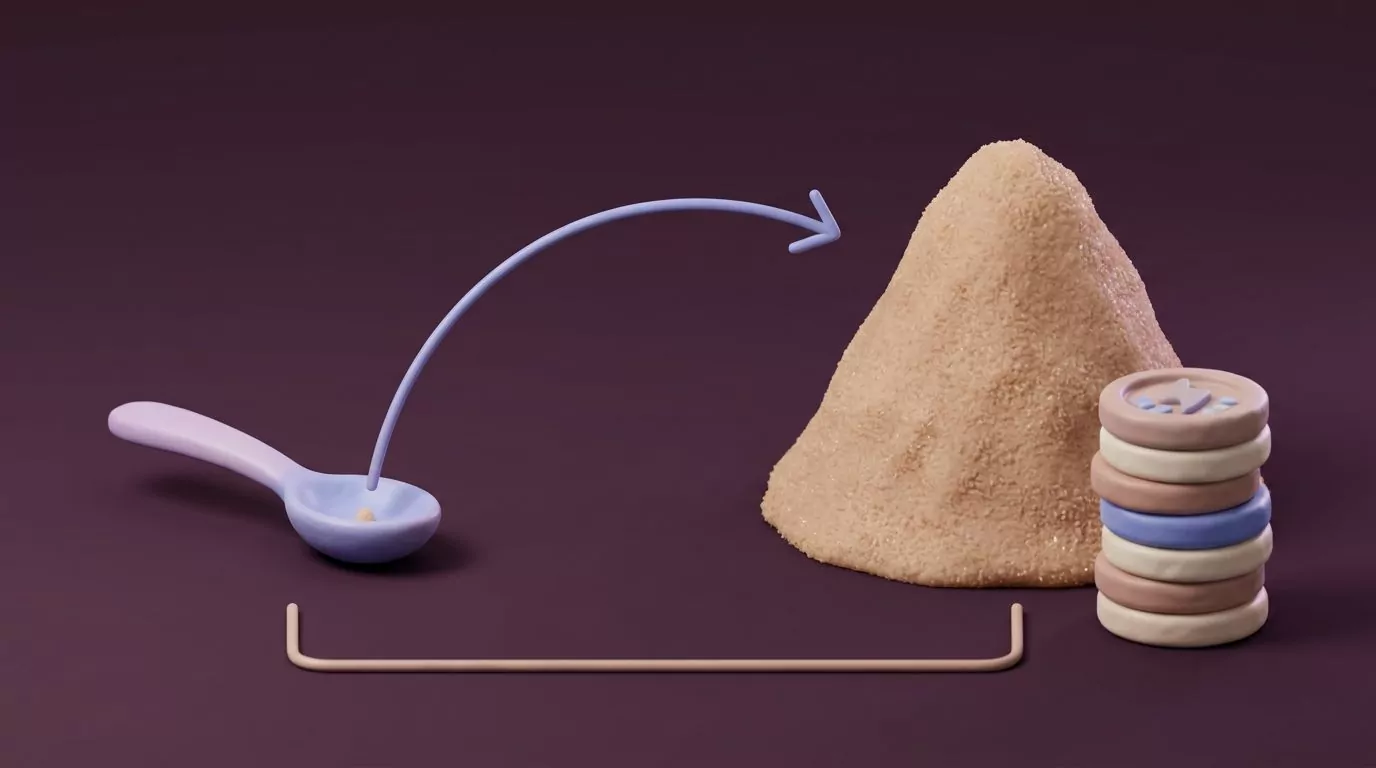
A packed teaspoon is 4.6 g, or about 6 mg of potassium, which is 0.1% of the Daily Value. Calcium is the best case at about 4 mg, or 0.3%.
Reaching 10% of the potassium Daily Value would take roughly 350 g of brown sugar in a day, over 1,300 calories of sugar. Calcium takes about 157 g, close to 600 calories and about three times the 50 g WHO treats as the ceiling on a 2,000 calorie day. Run any of these through the Sugar to Calories Calculator, which turns grams into calories, teaspoons and cubes.
Is Coconut Sugar Healthy? The Glycemic Index Claim
Coconut sugar is sold as the gentler option, and the claim rests on one number: a glycemic index of 35. That figure traces to the Philippine Food and Nutrition Research Institute, or FNRI, but to a separate release, not the sap abstract linked beside it.
Worth opening that source. The FNRI abstract on coconut sap sugar reports "a low glycemic index" without printing a value, and its closing line asks for a human study to confirm the results.
The 2021 International Tables of Glycemic Index, from the University of Sydney group, do carry a coconut sugar entry. Online Supplemental Table 1 lists one organic Indonesian product, tested in 2014, at a GI of 54 plus or minus six, in nine people. That is low on the tables' own scale, which counts 55 or under as low. One product and nine people is thin ground for a claim printed on many bags.
For scale, Table 1 of the same paper puts the whole sugars and syrups category at a mean GI of 58 across 50 foods. That is an average, not a coconut figure: the category runs from an agave nectar at 10 up to glucose syrup at 107.
A lower glycemic index is still not less sugar. The branded coconut sugar above lists 87.5 g of sugars per 100 g. The same caution fits any sweetener sold on one number, as the stevia debate shows.
Every One Counts as Added Sugar
Swap the sugar, keep the total, and nothing has changed. The American Heart Association caps added sugar at about 25 g a day for women and 36 g for men, or six and nine teaspoons. The World Health Organization puts free sugars under 10% of energy and ideally under 5%, about 50 g and 25 g on a 2,000 calorie day.
Honey, maple syrup and agave count the same way. On a US label they all land on the Added Sugars line, which the FDA measures against a 50 g Daily Value.
WHO's free sugars definition leaves out the sugars locked inside intact fruit, vegetables and milk, so an apple is not treated like a spoon of brown sugar. The Fruit Sugar Chart covers 50+ fruits per serving and per 100 g. Start with what added sugar means and how much sugar per day fits your calories, or get your number from the Daily Sugar Intake Calculator.
Why bother with a ceiling? A 2023 BMJ umbrella review by Huang and colleagues pooled 73 meta-analyses and found harmful associations between high sugar intake and a long list of health outcomes. Associations, not proof: the authors rated most of that evidence low quality.

When Brown Sugar Makes Sense: Baking
Molasses holds moisture and brings a caramel note, so brown sugar gives softer, denser cookies. That is a real reason to buy it: choose it for taste, then count the grams.
How to Count Any Sugar in Seconds
Say you stir two packed teaspoons of brown sugar into your oatmeal. That is about 9 g of added sugar, over a third of the AHA limit for women, before anything else that day. Cereal adds its own load, as sugar in breakfast cereal shows.
You already know it is 9 g, so log it manually. Photo logging is for meals where you do not know the number, and you review and confirm every estimate before it saves. Sugar Tracker: Food Scanner is free on the App Store for iPhone: photograph the food, it estimates the added sugar in grams, you confirm, and the day shows against the WHO and AHA limits.
Prefer your own math? The Sugar Grams to Teaspoons Converter moves between grams, teaspoons, sugar cubes and calories. This is general information, not medical advice; if you have diabetes or another condition, follow your clinician's guidance.
Frequently Asked Questions
Does brown sugar raise blood sugar less than white sugar?
No meaningful difference. Both are nearly all sucrose in FoodData Central, 94.6% for brown and 99.8% for white, and EUFIC notes the two are digested and metabolised the same way. The 2021 international tables put sucrose at a mean GI of 66 across seven studies. People with diabetes should follow their clinician's numbers.
Is dark brown sugar healthier than light brown sugar?
No. Dark brown sugar holds more molasses, which sets the shade: roughly 6.5% by weight against 3.5% for light. FoodData Central has only one reference entry for brown sugar, and its branded light and dark entries carry label data with no minerals listed, but its molasses entry points the way: 1,460 mg of potassium per 100 g against brown sugar's 133 mg. Per teaspoon the starting point is still 0.1% to 0.3% of a Daily Value.
Is granulated sugar the same as white sugar?
Yes. Granulated sugar is ordinary white table sugar, listed as "Sugars, granulated" in FoodData Central.
Is coconut sugar healthier than brown sugar?
Not in any way the numbers support. Both are almost entirely sugar per teaspoon, and brown sugar's minerals are the 0.1% to 0.3% figures above. Coconut's edge rests on the glycemic index claim covered earlier, and a lower index is not less sugar.
How much sugar is in molasses?
FoodData Central lists molasses at 74.7 g of sugars and 290 calories per 100 g. A tablespoon weighs 20 g, so that is about 15 g of sugars and 58 calories. It counts as added sugar under the AHA and FDA definitions, and as a free sugar under WHO's, the same as the sugar in a can of coke.