Does Sugar Cause Inflammation? What the Evidence Shows
Too much added sugar, especially from sugary drinks, is linked to higher inflammation markers such as C-reactive protein (CRP). Among 3,217 US men in a large Harvard study, those who drank more sugary drinks had higher CRP in a one-time blood test. But small trials haven't shown that sugar itself is the cause, and extra calories and weight gain may explain part of the link.
Whatever the final verdict, the WHO and AHA sugar limits still apply, so cut sugary drinks first.
The Short Answer: Does Sugar Cause Inflammation?
Three ideas get blended together online. First, high added-sugar intake, especially from drinks, is associated with higher inflammation markers, mostly in observational data plus one small trial.
Second, trials comparing one sugar with another (fructose, glucose, table sugar or high fructose corn syrup) mostly find no reliable difference. One small pooled analysis found slightly higher CRP with the syrup, but the type of sugar doesn't seem to matter much.
Third, none of these studies tested whether cutting sugar treats any condition.
What "Inflammation" Means in These Studies
The NIEHS describes acute inflammation as the short, useful response to an injury or infection. Chronic inflammation can persist for months or years, and it may cause no outward symptoms at all.
So researchers use blood markers. The main one is C-reactive protein (CRP), made by your liver, and studies also track interleukin-6 (IL-6) and TNF-alpha.
MedlinePlus says the more sensitive hs-CRP test measures very small increases and is used to estimate heart disease risk. But a result shows that inflammation is present, not what's causing it or where it is.
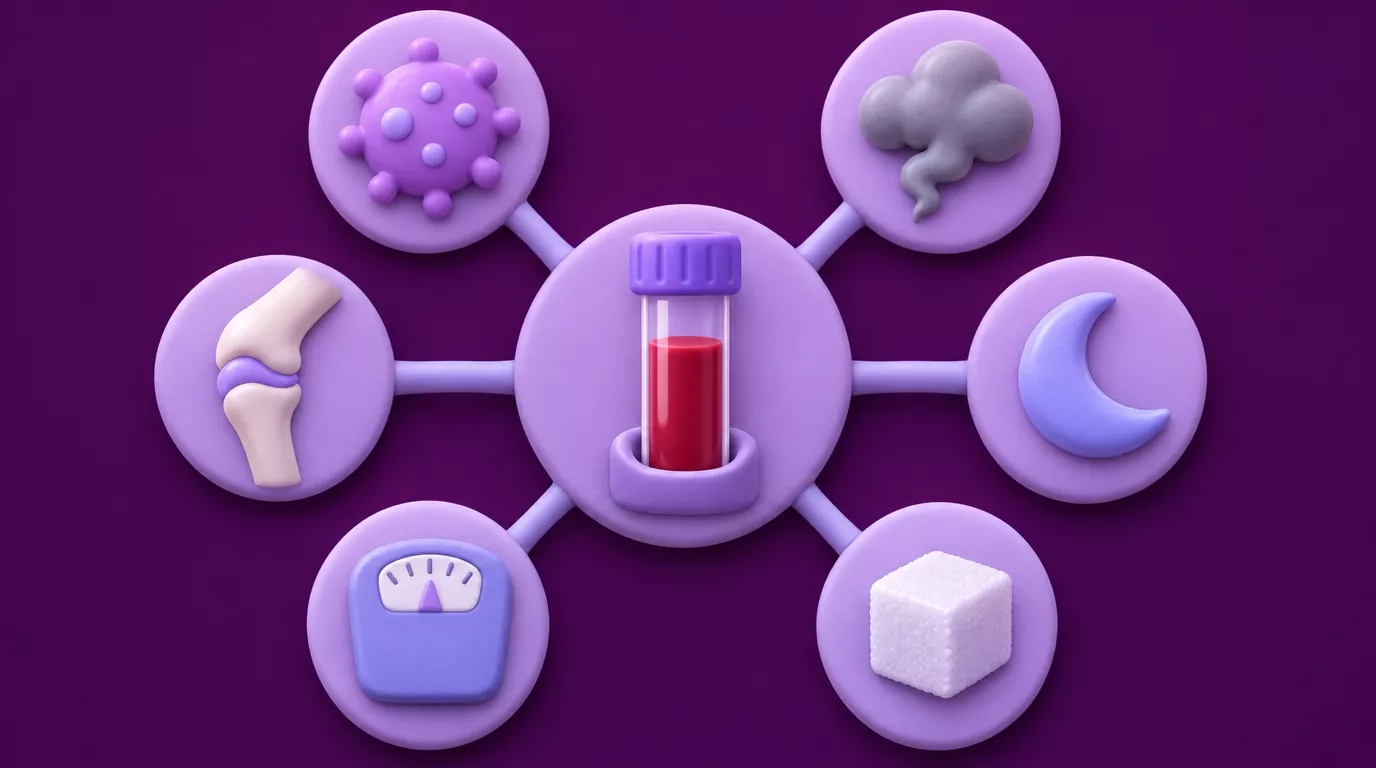
CRP also rises with infections, smoking, polluted air and autoimmune or bowel disease, and it's linked to insomnia and obesity. One reading reflects many things.
Sugar and Inflammation: What the Research Shows, Claim by Claim
Claims online range from "sugar is the root of all inflammation" to "it's a myth," and the evidence sits in between.
| Claim | What studies found | How strong the evidence is |
|---|---|---|
| People who drink more sugary drinks have higher inflammation markers. | A 2012 Circulation study of 42,883 US men (de Koning and colleagues) linked more sugary drinks to higher CRP, IL-6 and TNF receptors, measured once in a blood-sample subgroup (CRP in 3,217 men). Artificially sweetened drinks were not associated in this cohort. | A one-time snapshot in about 3,200 men from a large cohort. Not proof of cause. |
| In a small trial, CRP was higher after weeks of sugary drinks than at the start. | Aeberli and colleagues (2011, American Journal of Clinical Nutrition) gave 29 healthy young men six 3-week periods: 600 ml a day of drinks with 40 to 80 g of fructose, glucose or sucrose, or low-fructose advice. hs-CRP was 60 to 109 percent above baseline after every period, advice included. | Randomized, but small, short and in young men only. Each man was compared with his own starting level, not a no-sugar group, so it can't pin the result on the drinks. |
| Fructose or high fructose corn syrup is more inflammatory than other sugars. | A 2018 meta-analysis of 13 trials with 1,141 people (Della Corte and colleagues) found no CRP difference between fructose and glucose, or between the syrup and table sugar. A 2016 trial in 24 adults (Kuzma and colleagues) found no CRP or IL-6 difference either. One 2022 pooled analysis of three studies (Li and colleagues) found slightly higher CRP with the syrup. | Low and mixed, with no reliable difference by sugar type so far. The high fructose corn syrup guide has the details. |
| Sugar drives autoimmune disease or arthritis flares. | A 2022 Frontiers in Immunology narrative review (Ma and colleagues) sums up earlier studies rather than testing sugar in people. Its authors call the open questions fundamental. | A hypothesis, not a finding. |
| Raw or unrefined sugar fights inflammation. | A 2023 systematic review (Ebadi and Azlan) checked 36 studies. Only 5 measured inflammation markers, all in cells (2) or animals (3). | No human evidence. |
| Sugar in whole fruit is inflammatory. | None of the studies above tested whole fruit. | Not tested here. |

The Strongest Signal: Sugary Drinks
The 3-week trial's 80 g a day is about 19 teaspoons of sugar, and 40 g is about 9.5 (at 4.2 g per teaspoon). Even the lower dose tops the AHA limits of 25 g for women and 36 g for men. The higher one is more than three times the WHO ideal of 25 g (6 teaspoons).
The trial's 600 ml serving is roughly a 20 oz bottle. The Sugar Grams to Teaspoons Converter handles other amounts. It runs in your browser, no signup.
Why drinks? Liquid sugar goes down easily without filling you up. Harvard Health notes that calories from sugary drinks don't satisfy like solid food.
If soda is your main source, the guide on how to stop drinking soda walks through swaps.

Where the Evidence Gets Thin
Four plain limits keep this from being a closed case:
- Markers, not disease. Most studies measure CRP or IL-6, not whether anyone got sick.
- Hard to untangle. Observational studies can't fully separate sugar from overall diet, weight and lifestyle.
- Small and short. The two trials named here are small, with 8-day and 3-week periods.
- No low-sugar group. Many trials compare one sugar with another, so they can't show what cutting sugar would do.
Why Researchers Think Sugar Could Matter
Researchers have a few working ideas, and all are still being tested:
- Extra calories. Weight gain adds visceral fat, the deep belly fat around the organs, which releases inflammatory signals.
- Blood sugar and insulin rises. Repeated spikes after sugary meals are one proposed pathway. Over time, cells may respond less to insulin, and this insulin resistance and inflammation may feed each other.
- AGEs. Advanced glycation end products form when sugars bind to proteins or fats. In lab studies, they can switch on inflammatory signals in cells.
- Gut bacteria. High-sugar diets may shift the mix of bacteria in the gut. Gut bacteria interact with the immune system, so researchers are testing whether that shift affects inflammation.
Much of this comes from lab and animal work, not trials in people.
Added Sugar vs Sugar in Whole Foods
Added sugar is sugar put into food during processing, cooking or at the table. The WHO uses a wider term, free sugars, which also covers honey, syrups and fruit juice. More in what is added sugar.
Whole fruit and plain milk are a different case. The WHO guideline leaves them out, citing no reported evidence of harm. The Fruit Sugar Chart shows how fruits compare.
Brown, raw, cane and coconut sugar still count as added sugar on a label and as free sugar under the WHO (see brown sugar vs white sugar). Honey is free sugar too, and is honey better than sugar covers the honey trials on inflammation markers.

How Much Sugar Is Too Much? What WHO and AHA Advise
The WHO advises keeping free sugars under 10 percent of daily energy, ideally under 5 percent (about 25 g or 6 teaspoons). At 2,000 calories, that 10 percent ceiling is 50 g. The AHA suggests no more than 25 g of added sugar a day for women and 36 g for men.
The NHS sets 30 g of free sugars a day for adults. The average American eats about 68 g a day, or 17 teaspoons.
These limits rest on overall health evidence, not an inflammation threshold: body weight and tooth decay for the WHO, heart health for the AHA.
So how much sugar causes inflammation? No study here sets a cutoff. In the trial that gave 40 to 80 g a day from drinks, hs-CRP also rose with advice alone, so those amounts aren't a threshold, safe or unsafe.
See how much sugar per day, or get your own number from the Daily Sugar Intake Calculator.
Practical Ways to Cut Back on Added Sugar
These steps help you land inside the WHO and AHA limits. They aren't a promise to lower inflammation or treat anything.
1. Swap the Drink First
For many people, sugary drinks are the biggest single source of added sugar. Swapping one 330 ml can of cola for water, sparkling water, or unsweetened tea or coffee takes out about 35 g. If that's too big a jump, go halfway: mix sweet tea half and half with unsweetened, or ask for fewer pumps of syrup in your coffee.
The Sugar Swap Finder shows swaps with the grams you save. The Sugar in Drinks Calculator totals a day of drinks.
2. Read the Added Sugars Line, Not Just Total Sugars
On a US label, Total Sugars includes sugar from milk and fruit. Added Sugars is the line that matches the AHA limits. If a yogurt shows 15 g Total Sugars and 9 g Added Sugars, count the 9 g.
More in total sugars vs added sugars. The Hidden Sugar Finder flags 70+ other names for sugar in ingredient lists.
3. Keep Whole Fruit, Watch Juice and Smoothies
The NHS suggests no more than 150 ml of juice and smoothies a day. Per USDA FoodData Central, a 150 ml glass of orange juice has about 13 g of sugar, and a medium orange about 12 g. Juice counts toward the WHO free-sugar limit; whole fruit doesn't.
4. Cut the Size Before You Cut the Food
You don't have to give up a food to cut its sugar. Half a dessert, or a small drink instead of a large one, cuts the grams and keeps the treat. A 330 ml can of cola (about 35 g) instead of a 600 ml bottle (about 64 g) saves about 29 g.
5. Track a Normal Week
Log a normal week, not a "good" one, to see where your added sugar comes from. The food journal guide shows how, and the Printable Sugar Tracker Log gives you a weekly tally on paper.
On your phone, Sugar Tracker: Food Scanner is free to download on the App Store for iPhone (iOS 15.1 or later). Snap a photo of a meal or drink, review the AI estimate of added sugar with its range and confidence, then adjust or confirm it to see your daily total.
Manual entry works too, and your log stays on your iPhone. It's a tracking tool, not medical advice, and it says nothing about inflammation.
There is no Android version yet. Android readers can use the browser tools above instead.
When to Talk to a Doctor
Joint pain, swelling, tiredness or skin flares have many possible causes, and sugar is rarely the whole story. If you have arthritis, diabetes, inflammatory bowel disease or another condition, follow your clinician's plan.
A clinician can tell you whether a CRP test makes sense for you and what a result means.
Frequently Asked Questions
How quickly does sugar affect inflammation, and how long does it last?
There's no evidence-based timeline. The two trials named here gave sugary drinks every day for 8 days (no difference between sugars) or 3 weeks, so neither tested a single treat. None measured how fast markers fall after cutting back, so if you're worried, talk to your doctor.
Does sugar cause inflammation in joints?
The Arthritis Foundation advises limiting added sugar. But the human evidence linking sugar to joint inflammation is mostly observational, and no study here shows that sugar causes arthritis. If you have arthritis, follow your rheumatologist's advice.
Are there symptoms of inflammation from sugar?
No symptom points to sugar. Chronic inflammation may cause no outward symptoms, and a CRP test shows that inflammation is present, not what's causing it. Aches or tiredness have many causes, so don't self-diagnose.
Is cane sugar inflammatory, and is raw sugar any better?
Cane sugar is sucrose, the same table sugar used in the trials above. For raw or unrefined sugar there's no human evidence, only cell and animal studies. Both still count as added sugar.
Does fruit sugar cause inflammation?
The research here is about added sugar and sugary drinks, not whole fruit, which the WHO doesn't count as free sugar. If you mean fructose, the pooled trials found no CRP difference between fructose and glucose.
See Your Own Added Sugar Number
The clearest signal in this research is a daily pattern of added sugar, especially from drinks. Knowing your own number is a calm place to start.
Try the How Much Sugar Do You Eat? Quiz first. Then download Sugar Tracker on the App Store and log your next meal with a photo.