What Are Sugar Alcohols? The 7 Polyols on Food Labels, Explained
Sugar alcohols, also called polyols, are carbs that are neither sugar nor alcohol. The seven on food labels are erythritol, xylitol, sorbitol, maltitol, mannitol, isomalt and lactitol. Your body absorbs them slowly and not fully. So they carry 0.2 to 2.6 calories per gram, and US labels don't count them as sugars.
What are sugar alcohols?
The name misleads twice. The FDA's label handout says they share traits with sugars and alcohols. But they hold none of the alcohol in beer or wine.
Small amounts occur in fruit and veg, the FDA says. The rest are made from sugar and starch. Makers use them for sweetness plus bulk and texture, which is why they fill sugar-free gum and chocolate.
That handout names eight as examples: erythritol, hydrogenated starch hydrolysates (HSH), isomalt, lactitol, maltitol, mannitol, sorbitol and xylitol. HSH is a blend, not one polyol, so this guide covers the other seven.
Keep one thing straight: allulose is a rare sugar, not a sugar alcohol. Polyols aren't sugar, and they aren't added sugar. That second point drives everything below.
The 7 sugar alcohols you'll see on labels
Calories and sweetness vary a lot across this sugar alcohols list. The middle columns come from Table 4 of the Academy of Nutrition and Dietetics 2012 paper on sweeteners. The EU column is Annex XIV of Regulation (EU) No 1169/2011.
| Sugar alcohol | Calories per gram (Academy, 2012) | Sweetness vs sugar (Academy, 2012) | EU calories per gram | Typical foods (general examples) |
|---|---|---|---|---|
| Erythritol | 0.2 | 60% to 80% | 0 | Sweetener blends, drinks |
| Xylitol | 2.4 | As sweet as sugar | 2.4 | Gum, mints, candy |
| Sorbitol | 2.6 | 50% to 70% | 2.4 | Sugar-free gum, jam |
| Mannitol | 1.6 | 50% to 70% | 2.4 | Pressed mints, hard candy |
| Maltitol | 2.1 | 90% | 2.4 | Sugar-free chocolate |
| Isomalt | 2.0 | 45% to 65% | 2.4 | Hard candy, lozenges |
| Lactitol | 2.0 | 30% to 40% | 2.4 | Sugar-free baked goods |
HSH gets no row because it's a blend. That table puts it at 3.0 calories per gram and 25% to 50% as sweet as sugar.
One footnote: 21 CFR 101.9 gives erythritol 0 calories per gram for US label math.

Erythritol and xylitol
These two come up together so often that xylitol vs erythritol is its own search. The table shows why they sit at opposite ends. Erythritol is the lowest in calories of the seven, at 0.2 per gram.
Xylitol is the sweetest of the seven: as sweet as sugar, ahead of maltitol at 90%.
Sorbitol and mannitol
Sorbitol shows up in sugar-free gum, candy and jam. Mannitol is common in pressed mints. Only these two must carry a laxative warning.
Maltitol, isomalt and lactitol
Maltitol is the closest of these three to sugar in sweetness, at 90%, so it swaps in cleanly. Isomalt keeps its sweetness when heated, which suits hard candy. Lactitol is the mildest of the seven, at 30% to 40% of sugar's sweetness.
How sugar alcohols appear on the US Nutrition Facts label
Most people read this part wrong. Polyols add calories and carbs. They never add to the sugar lines.
The FDA counts Total Sugars as free single and double sugars: glucose, fructose, lactose, sucrose. Polyols are none of those. They sit outside that line, and outside Added Sugars under it.
The optional Sugar Alcohol line
Listing sugar alcohols is optional under 21 CFR 101.9(c)(6)(iv). It becomes a must once the pack claims something about sugar alcohol, total sugars, or added sugars.
It is indented under Total Carbohydrate, not under Total Sugars or Added Sugars. If the food holds one polyol only, the label may print that name, such as "Xylitol".
Why "sugar-free" can still taste sweet
Polyols sweeten on their own. The table above puts them at 30% to 100% of sugar's sweetness, so a maker can drop the sugar and keep the taste.
"Sugar-free" is a claim about the sugar lines on the label, not about how the food tastes. That is how a bar reads 0 g Total Sugars and still eats like candy.
Which label lines include sugar alcohols
| Label line | Includes sugar alcohols? | What it tells you |
|---|---|---|
| Calories | Yes | Sugar-free is not calorie-free. Erythritol is the exception, at 0 on US labels. |
| Total Carbohydrate | Yes | Every polyol gram sits in here. |
| Total Sugars | No | A polyol-sweetened bar can read 0 g. |
| Added Sugars | No | The closest US line to the WHO and AHA limits. |
| Sugar Alcohol | Yes | Optional, so a blank proves nothing. |
| Ingredients | Yes | Polyols are declared here by name. |
Outside the US: the polyols line
EU and UK labels may add a separate "of which polyols" line under carbs, in the order Annex XV of the same EU rule sets, which Great Britain kept in its own law. The line is optional: Article 30 requires only energy, fat, saturates, carbohydrate, sugars, protein and salt. Either way, "sugars" there is defined to leave polyols out. The Food Label Sugar Decoder takes the "of which sugars" number and gives you the UK traffic-light rating.
Sugar alcohol vs sugar: side by side
| Sugar | Sugar alcohols | |
|---|---|---|
| Calories per gram | 4 (see the 4-calorie math, or the Sugar to Calories Calculator) | 0.2 to 2.6, from the table above |
| Sweetness | The benchmark | 30% to 100% of sugar (Academy, 2012) |
| Digestion | Taken up in the small intestine | Only partly taken up (Harvard Health) |
| Blood sugar | Raises it | Harvard Health says sugar alcohols are only partly absorbed, so they raise blood sugar and insulin less than sugar does |
| Tooth decay | Feeds plaque bacteria | May carry the FDA claim "does not promote tooth decay" |
| Counts as added sugar? | Yes | No |
That tooth row is a regulated claim, not marketing. Under 21 CFR 101.80, foods sweetened with these polyols may say they do not promote tooth decay.
Do sugar alcohols count toward your added-sugar limit?
No. Two definitions put them outside it.
The WHO's 2015 advice covers free sugars: single and double sugars added to food, plus the sugars in honey, syrups and juice. The FDA's added sugars rule covers the same family. Polyols are in neither.
So the limits track the sugar in a product, not the polyols. The WHO says keep free sugars under 10% of daily energy, ideally under 5%. At 2,000 calories that's about 50 g and 25 g. The AHA caps added sugar at 25 g a day for women and 36 g for men. The Daily Sugar Intake Calculator gives you your own figure.
The upshot: a sugar-free bar with 18 g of maltitol and 1 g of added sugar spends 1 g of your limit, not 19 g. How much sugar per day is OK covers both guidelines.
The laxative-effect statement on US labels
Sorbitol and mannitol thresholds
Two polyols trigger a required warning. Under 21 CFR 184.1835, a food must print "Excess consumption may have a laxative effect" if normal use could reach 50 g of sorbitol a day. 21 CFR 180.25 sets the same trigger for mannitol at 20 g.
Other polyols may carry the line by choice. So it flags a careful maker, not a specific polyol.
General tolerance
Sugar alcohol side effects come from the trait that cuts the calories. The FDA says gut bacteria ferment most polyols in the large intestine, which brings gas, bloating and diarrhea for some people. Harvard Health suggests adding them slowly.
Are sugar alcohols bad for you? What the evidence says
What the erythritol and xylitol research shows
Most recent headlines trace to one research team. Reading it fairly means keeping links and proof apart.
In 2023, Witkowski and colleagues reported in Nature Medicine that higher blood erythritol went with more deaths, heart attacks and strokes. Those patients were already being checked for heart disease. The authors called it an association, not a cause.
In 2024 the same team reported that 30 g of erythritol raised platelet activity in 10 healthy people, against 10 more who drank glucose. They called the study small. Earlier that year they reported the same pattern for xylitol in the European Heart Journal.
Harvard Health's December 2023 piece said the first erythritol finding had not been confirmed by later work. That was right at the time, and the date matters. The same team has added those two studies since, while granting that long-term diet studies are missing.
Where regulators stand
The FDA has not changed course. EFSA has tightened one number. In a June 2023 memo, the FDA reviewed the Nature Medicine paper, found it could not establish cause, and named diet among the factors left out. It did not question erythritol's safety record.
In Europe, EFSA re-checked erythritol in December 2023 and set a daily limit of 0.5 g per kg of body weight, mainly against the laxative effect. EFSA also found intake in every age group already sits above that limit, and kept the "excessive consumption may produce laxative effects" warning on the label. The WHO's 2023 sweetener guideline leaves polyols out of scope, because they carry calories.
Read a sugar-free label in 30 seconds
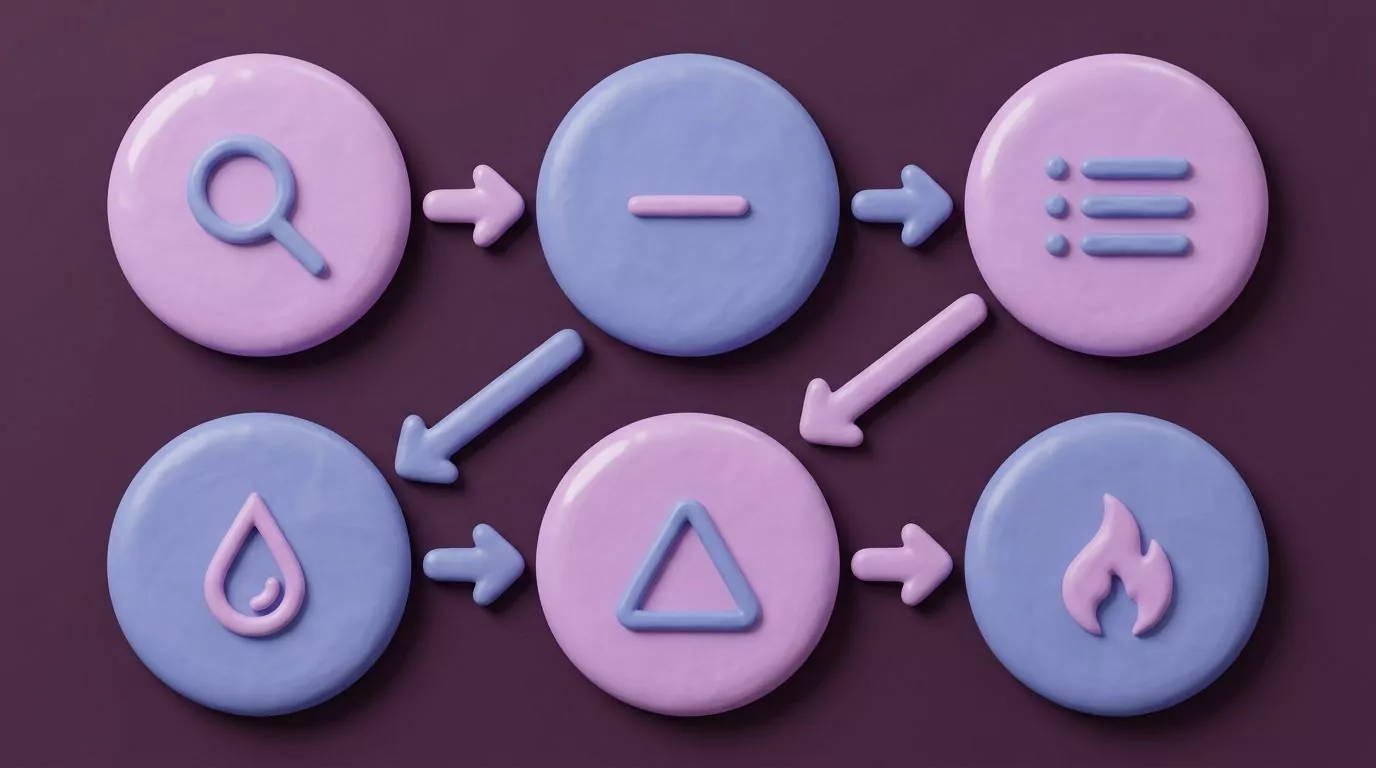
- Check Added Sugars. This is the closest US label line to the WHO and AHA limits.
- Check the Sugar Alcohol line. If it's there, you know the gram load. A blank proves nothing, since it's optional.
- Scan the ingredients for polyol names. Most end in "-ol", though isomalt and HSH don't. And not every "-ol" is a polyol: tocopherols are vitamin E.
- Scan again for added sugars. Sugar-free packs often still carry syrups or juice concentrates. The Hidden Sugar Finder highlights every added sugar in a pasted ingredient list.
- Look for the laxative line. It usually means sorbitol or mannitol at a real dose, though any maker may add it.
- Read the calories. Sugar-free chocolate and cereal are rarely light. Compare with the regular version, as with any cereal box.
Tracking gets simple at that point. Sugar Lens, on the App Store as "Sugar Tracker: Food Scanner", tracks added sugar, and polyols aren't added sugar. You photograph the food, it estimates the added sugar in grams, and you review and confirm every entry. With a sugar-free bar, check that estimate against Added Sugars.
Frequently Asked Questions
Do you subtract sugar alcohols from carbs?
Not on the US label. Total Carbohydrate includes sugar alcohols, and the FDA has never defined "net carbs". The Sugar Alcohol line tells you how many of those grams are polyols.
How many calories are in sugar alcohols?
The table above runs from 0.2 calories per gram for erythritol to 2.6 for sorbitol, against 4 for sugar. EU and UK labels use a flat 2.4 for polyols, with erythritol at 0.
Are sugar alcohols natural or artificial?
Both. Harvard Health notes that sugar alcohols come from fruit and veg, but most sold today are made in a factory.
Is stevia a sugar alcohol?
No. Stevia comes from a plant, has no calories and adds no bulk, so it behaves nothing like a polyol. Our guide to whether stevia is bad for you covers the evidence.
Is xylitol dangerous for dogs?
Yes. The FDA warns that xylitol can poison dogs. It sets off a potent release of insulin and a rapid, steep drop in blood sugar, within 10 to 60 minutes of eating it. Keep sugar-free gum and nut butters away from them, and call a vet if a dog eats any.
The short version
Sugar alcohols are real carbs with real calories, in a label category of their own. The number that moves your daily limit is still Added Sugars, on a sugar-free bar and on a can of Coke alike. Sugar Tracker: Food Scanner is free on the App Store for iPhone.
This is general information, not medical advice. If you have diabetes or another condition, follow your clinician's numbers.