What Is Monk Fruit Sweetener? What's Actually in the Packet
Monk fruit (luo han guo) is a small round melon grown mainly in southern China. Its sweetness comes from compounds called mogrosides, and the extract is 100 to 250 times sweeter than sugar with almost no calories. Because so little is needed, most monk fruit sweeteners are mostly erythritol, allulose or dextrose. The ingredient list tells you what you're really buying.
What is monk fruit?
Monk fruit is the fruit of Siraitia grosvenorii, a vine in the gourd family, also called luo han guo. Fresh monk fruit spoils fast, so it's usually dried. In China, the dried fruit has long been used in teas and soups.
Monk fruit's sweetness doesn't come from sugar. It comes from mogrosides, mainly mogroside V, which your body doesn't digest like sugar, so they add sweetness with close to zero calories. According to the FDA's guide to sweeteners, monk fruit extract is 100 to 250 times sweeter than sugar, depending on how much mogroside it holds.
How monk fruit extract is made
Makers crush the fruit, filter the juice and concentrate the mogrosides into a powder or liquid. This strips out most of the fruit's own sugars, leaving an intensely sweet extract.
What's actually in the packet
Pure monk fruit extract is so strong that one serving is a tiny pinch. So almost every "monk fruit sweetener" on the shelf is a blend. The extract is a small share, and a bulking ingredient makes up most of the weight.
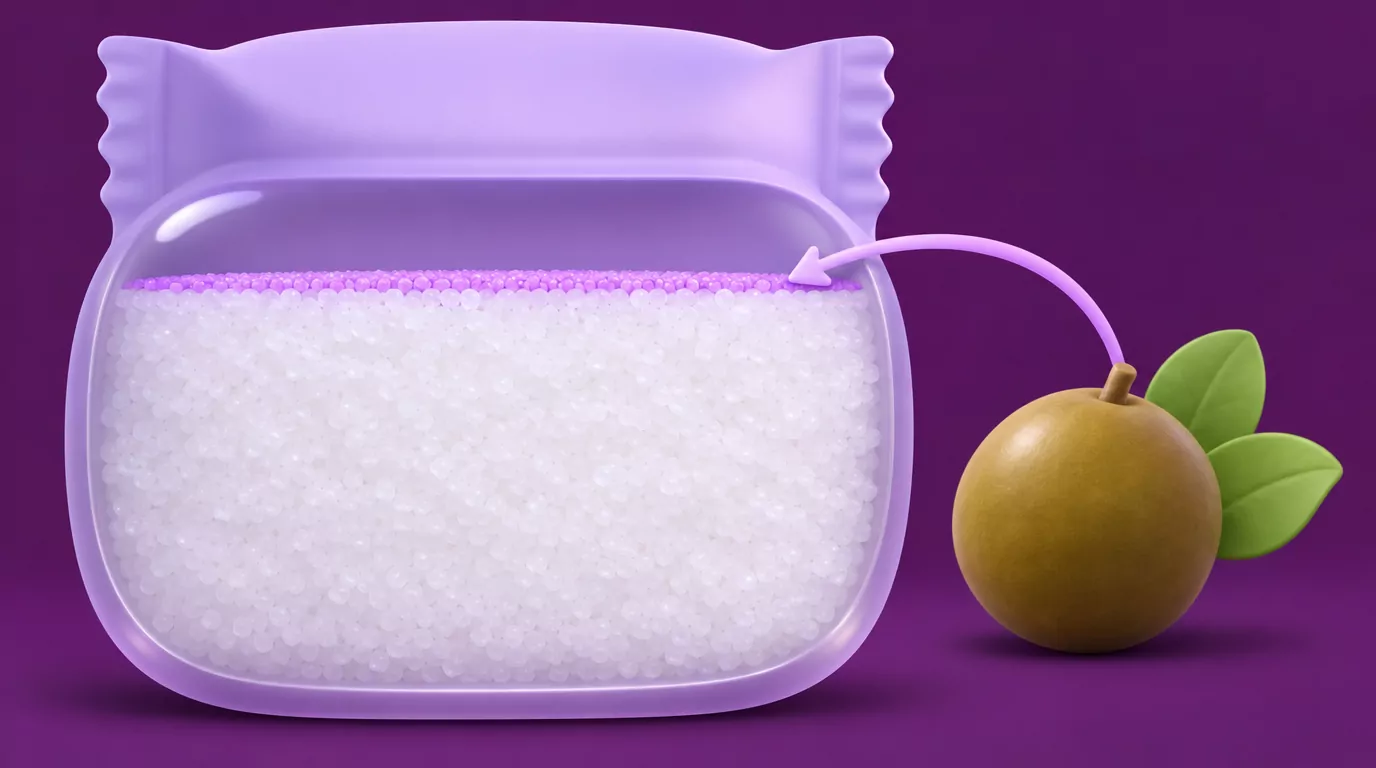
The usual bulking partners:
- Erythritol. A sugar alcohol and the most common base for 1:1 granulated blends. The guide to sugar alcohols like erythritol covers how it works and what the research says.
- Allulose. A rare sugar that the FDA lets makers leave out of Total Sugars and Added Sugars. See what allulose is for the label details.
- Dextrose or maltodextrin. Common in some single-serve packets. Dextrose is plain glucose, so it counts as added sugar; here's what dextrose is in more detail.
- Water or glycerin. The usual base for liquid drops.
- Stevia. Some "monk fruit" products also contain stevia.
The 10-second check is simple. Ingredients are listed by weight, from most to least. Whatever comes before "monk fruit extract" is what most of the packet is.
| Product form | What usually makes up most of it | How it measures against sugar | What to check on the label |
|---|---|---|---|
| 1:1 granulated blend | Often erythritol or allulose | Cup for cup, by design | The first ingredient is the base you're eating |
| Single-serve packet | Often erythritol or dextrose | The box says how much sugar one packet replaces | Sugars under 0.5 g show as 0 g, and 0.5 to 1 g shows as "less than 1 g", so look for dextrose in the ingredients |
| Liquid drops | Usually water or glycerin | A few drops replace a teaspoon or more | Check for added flavors or stevia |
| Pure extract powder | Mostly mogrosides | A tiny scoop, far stronger than sugar | Follow the package conversion |
Recipes vary by brand. Paste the ingredient list into the Hidden Sugar Finder. It flags dextrose and other names for sugar hiding among the bulking ingredients.
What "zero sugar" means on a monk fruit label
Under FDA labeling rules, sugars under 0.5 g per serving round to 0 g, and a serving under 5 calories can show as 0 calories. So a small packet with a little dextrose can honestly read 0 g sugars and 0 calories.
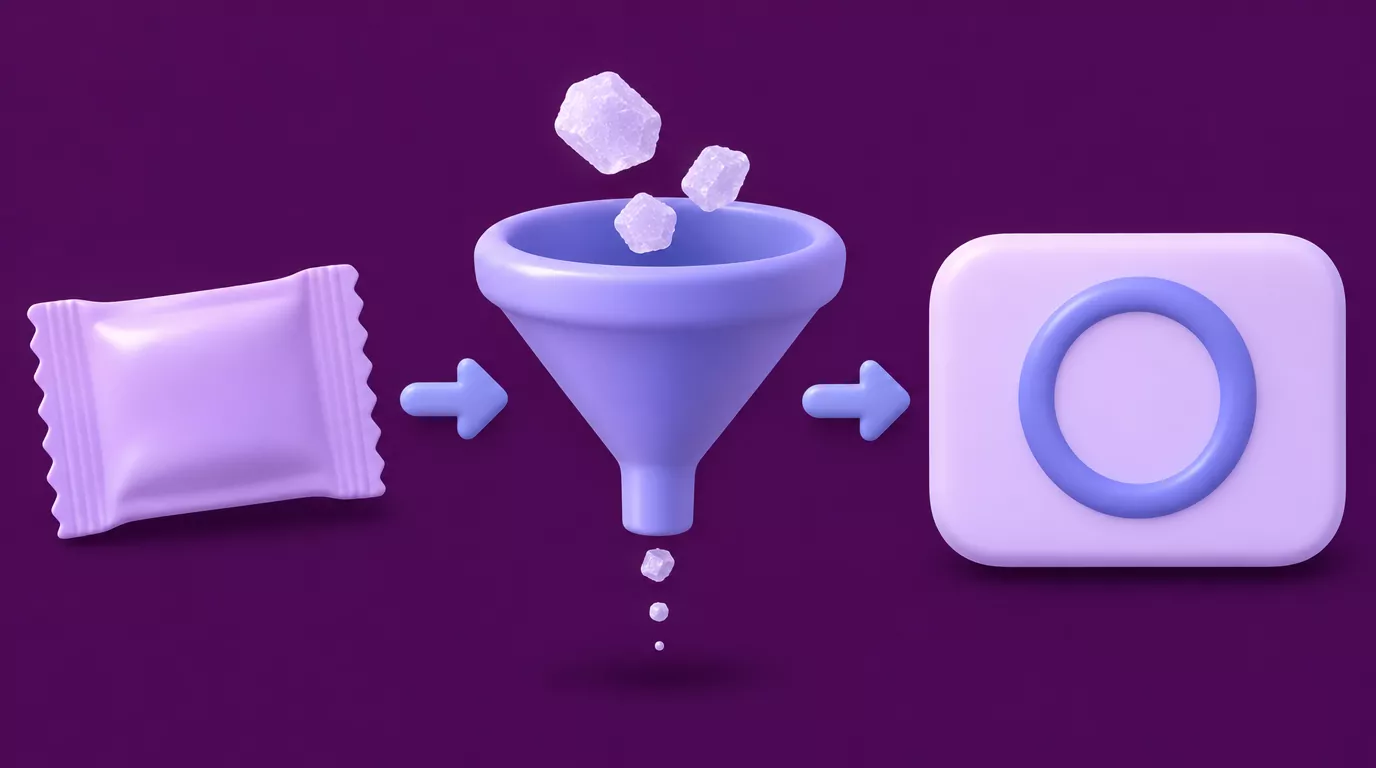
A "sugar free" or "zero sugar" claim means less than 0.5 g of sugars per serving. If a sugar-free product contains dextrose or another sugar, the FDA claim rules say the ingredient list must flag it as adding a trivial amount of sugar.
Mogrosides aren't sugars, so they don't count toward Total Sugars or Added Sugars. Erythritol and allulose also stay off the Added Sugars line. That means a blend can truthfully show 0 g added sugar while still carrying several grams of other carbohydrate. Those grams show up under Total Carbohydrate instead.
If the label lines confuse you, this guide to total sugars vs added sugars walks through each one. For packaged foods, the Food Label Sugar Decoder takes the sugars per 100 g and gives you the UK traffic-light rating plus per-serving math. Looking at sugar per 100 g is a handy way to see past a rounded 0 g per serving.
The takeaway: one packet is trivial. The label math only matters if you use a lot every day.
Is monk fruit safe? What regulators say
In the US, the FDA has reviewed several GRAS ("generally recognized as safe") notices for monk fruit extract and hasn't questioned any of them. The first one, GRAS Notice 301, closed in January 2010.
The EU is different. Monk fruit extract isn't currently authorised as a sweetener in the EU. In its 2019 review, the European Food Safety Authority (EFSA) said the data were not enough to conclude on its safety as a food additive. So if you've wondered why monk fruit is banned in Europe: it isn't authorised yet because the dossier was incomplete, not because it was found dangerous.
The WHO's 2023 guideline on non-sugar sweeteners suggests not using them as a way to control body weight. It's conditional advice about the whole sweetener category, not a finding about monk fruit. The post on whether stevia is bad for you covers that guidance in more depth.
Monk fruit side effects
The extract itself is used in tiny amounts and is generally well tolerated. Most stomach complaints people blame on "monk fruit" come from the erythritol base, which can cause bloating or gas in larger amounts. A 2023 study linked higher blood levels of erythritol with heart attack and stroke. It was an observational association that is still being studied, and it's about erythritol, not mogrosides.
If you have a medical condition, including diabetes, follow your clinician's advice on sweeteners.
Monk fruit vs stevia
Monk fruit and stevia get used the same way, but they come from different plants. Here's how they stack up.
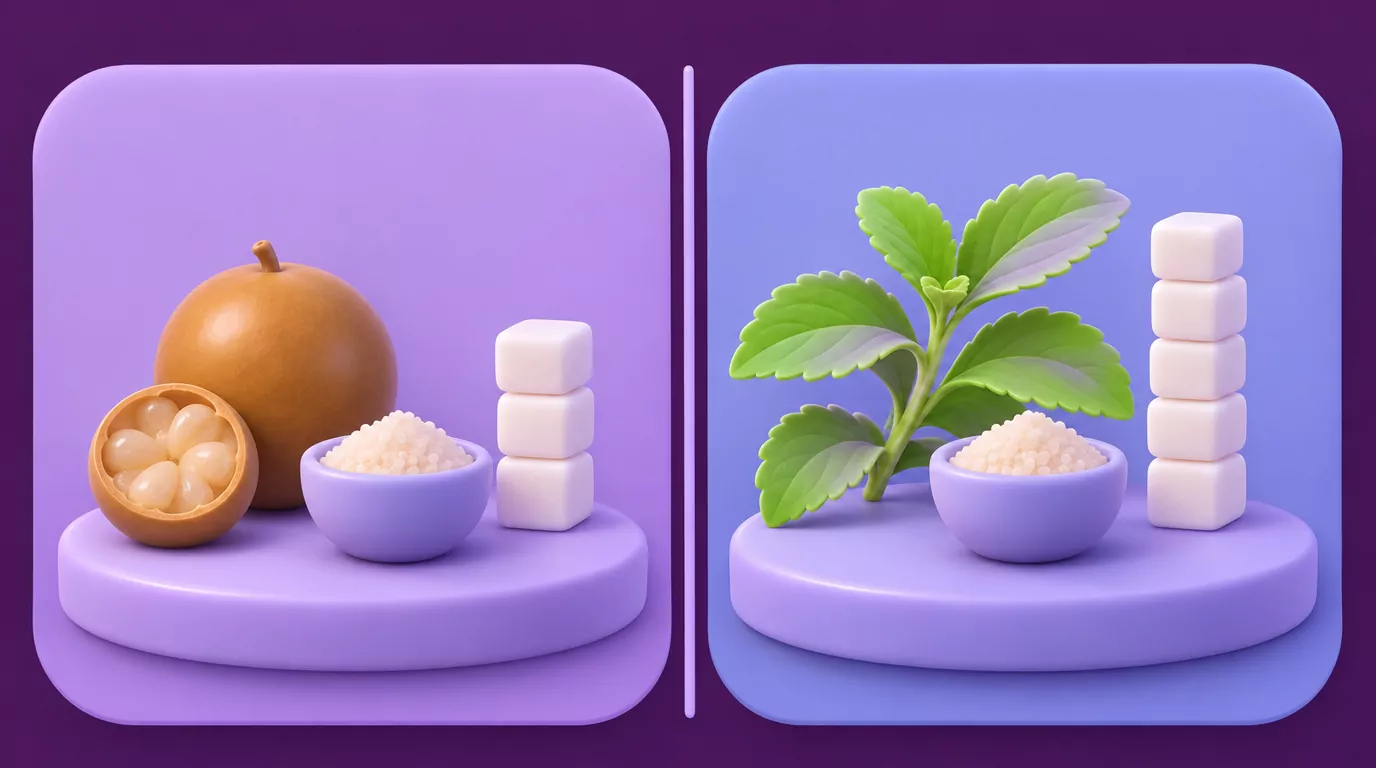
| Monk fruit | Stevia | |
|---|---|---|
| Source plant | Luo han guo fruit (southern China) | Stevia leaf (South America) |
| Sweet compounds | Mogrosides | Steviol glycosides |
| Sweeter than sugar (FDA) | 100 to 250 times | 200 to 400 times |
| Common taste notes | Often fruity; some people notice an aftertaste | More often described as bitter or licorice-like |
| US status | GRAS notices, no FDA questions | GRAS notices for high-purity extracts, no FDA questions |
| EU status | Not authorised | Authorised as E 960 |
| What retail blends usually contain | Often erythritol | Often erythritol |
The verdict: neither is a sugar, and both are usually sold as blends. Pick on taste and on the base ingredient.
Monk fruit vs erythritol
These two aren't rivals but partners. Erythritol is the bulk in most monk fruit blends, while the monk fruit extract supplies most of the sweetness. Erythritol is about 70% as sweet as sugar, so the extract tops it up.
Baking and cooking with monk fruit
Pure extract adds sweetness only, with no bulk, browning, moisture or structure, so recipes need adjusting.
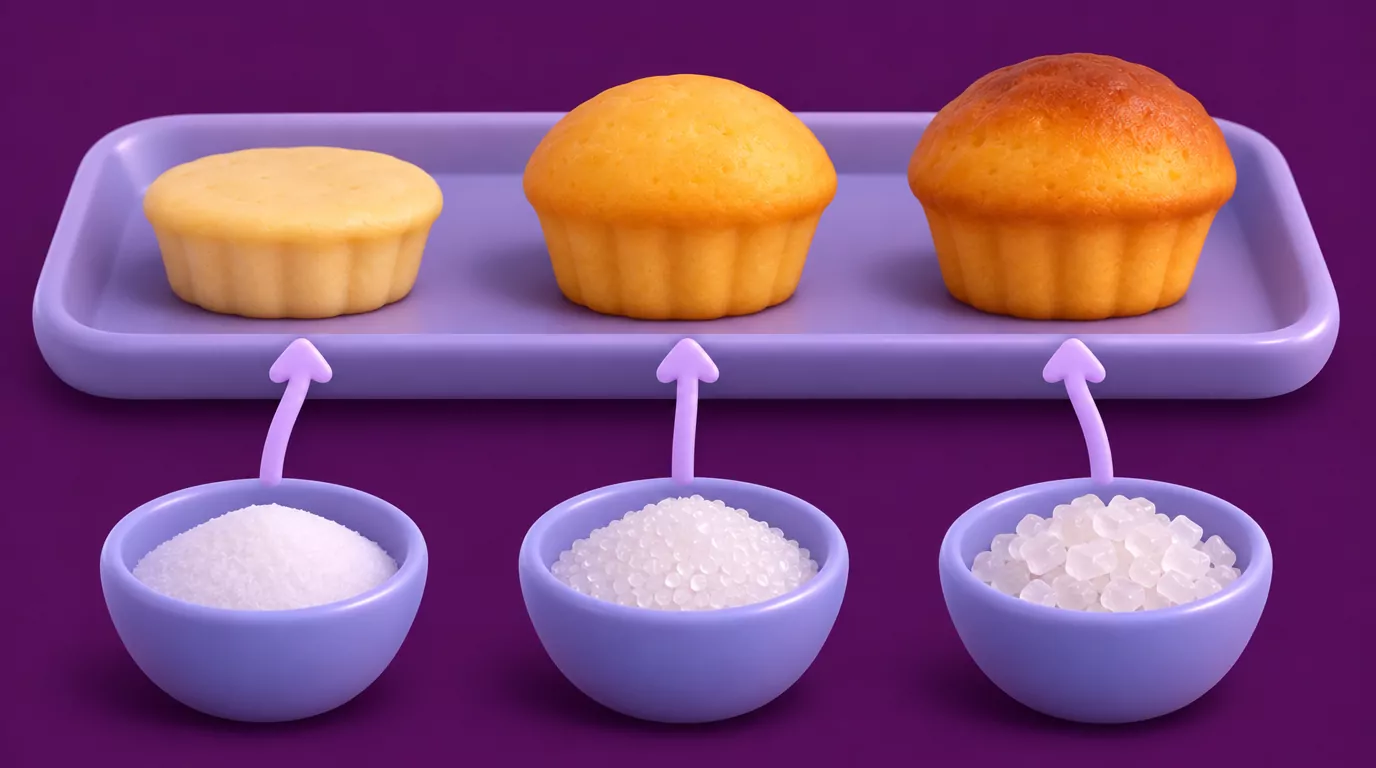
1:1 granulated blends measure like sugar by design, because the bulk is erythritol or allulose. Each base behaves a little differently:
- Erythritol blends can recrystallize as they cool and may leave a cooling taste in frostings and custards.
- Allulose blends brown faster than sugar, so lower the oven a little or watch the bake closely.
Is 1 cup of monk fruit equal to 1 cup of sugar? Only for products labeled 1:1. Strengths vary a lot, so follow the conversion on your package.
Is monk fruit a good swap when you're cutting back on sugar?
A monk fruit sweetener in your coffee or tea removes the added sugar from that drink. One teaspoon of sugar is about 4.2 g. Two teaspoons in each of three coffees adds up to about 25 g a day.
The WHO's ideal is under 25 g of free sugars a day, about 6 teaspoons. "Free sugars" means sugar added to food plus the sugar in honey, syrups and juice. The AHA suggests no more than 25 g of added sugar a day for women and 36 g for men. The guide to how much sugar per day breaks the limits down.
Think of sweeteners as a bridge, not a goal. Swapping the sugar keeps your taste for very sweet food in place. Many people use a swap while they slowly need less sweetness, and these tips on how to stop craving sugar help with that part.
For other easy wins, the Sugar Swap Finder shows lower-sugar swaps with the grams you save. The Daily Sugar Intake Calculator turns your calorie needs into a personal limit. Both run in your browser, no signup.
Frequently Asked Questions
Is monk fruit okay for you?
The FDA has not questioned the GRAS notices for monk fruit extract, and it's used in tiny amounts. Most side effects come from the erythritol base, not the extract. If you have a medical condition, follow your clinician's advice.
What is the difference between stevia and monk fruit?
They come from two different plants with two different sets of sweet compounds. Stevia is 200 to 400 times sweeter than sugar, and monk fruit is 100 to 250 times sweeter, per the FDA. Both are usually sold as blends.
Does monk fruit have an aftertaste?
Some people notice a fruity or lingering aftertaste. Blends with erythritol add a cooling note. Taste varies by product.
Why are people avoiding monk fruit?
Mostly because of headlines about erythritol, the base in many blends, and the "zero sugar" fine print. The extract itself has a clean US regulatory record. Its EU status comes up too.
Is monk fruit sweetener without erythritol a thing?
Yes. Pure extract powders, allulose-based blends and liquid drops all exist without erythritol. Check the ingredient list order: if erythritol isn't listed, it isn't in there.
Log your sweet swaps in seconds
Sugar Tracker: Food Scanner is free to download on the App Store for iPhone (iOS 15.1 or later). Snap a photo of your food or drink and you'll get an AI estimate of added sugar with a range and a confidence. Review it, adjust it if needed, and confirm it before it's logged, then see your daily total.
Your log stays on your iPhone. There is no Android version yet; Android readers can use the browser tools above. Download Sugar Tracker on the App Store.