9 Portion Control Tips That Make Sugar Tracking Easier
Portion control means deciding how much you eat instead of letting the package, plate or restaurant decide. For sugar, the amount matters as much as the food: a 12 oz can of cola has 39 g and a 20 oz bottle has 65 g. Measure your usual portion once, pick the smaller size of sweets and drinks, and log what you actually ate.
The nine portion control tips below focus on sugar rather than calories, and none of them bans a food.
Why Portion Size Can Matter More Than Food Choice for Sugar
The sugar you eat is simple math: how sugary a food is, times how much of it you eat. Often the amount moves the total more.
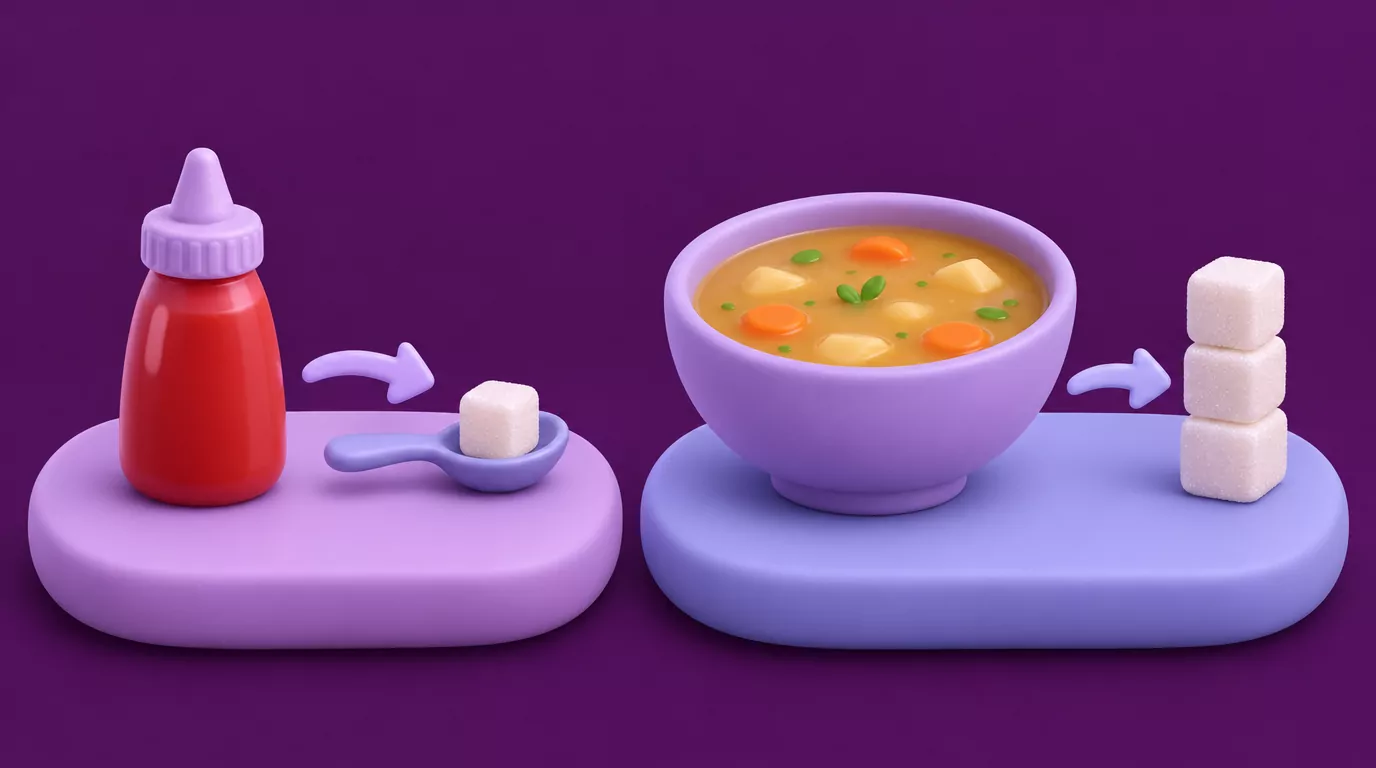
Take two foods from the Sugar in Food Checker, which lists typical label values for total sugars (brands vary). Ketchup has about 23 g of sugar per 100 g, a red rating under the UK traffic-light system, which grades sugar per 100 g. Yet one tablespoon adds only about 4 g.
Cream of tomato soup is the reverse. At 4.9 g per 100 g it rates green, but half a can is a 200 g serving, so your bowl holds about 9.8 g. The "low sugar" soup puts more than twice as much sugar in your log as the "high sugar" sauce.
Portion size also changes how much you eat in the first place. A 2015 Cochrane review by Hollands and colleagues looked at 72 studies, with a meta-analysis of 58 studies and 6,603 people. It found that people consistently eat more food and drink when they're offered larger portions, packages or tableware, and rated that evidence moderate quality.
Portions have also grown. A 2019 study by McCrory and colleagues in the Journal of the Academy of Nutrition and Dietetics tracked US fast-food chains from 1986 to 2016. Dessert portions grew by about 24 g of food weight per decade, faster than entrees at about 13 g.
Those are grams of food, not grams of sugar. Still, when big portions become the norm, they start to look like the right amount. That's often called portion distortion, and it's how a sugar total creeps up while the foods stay the same.
9 Portion Control Tips That Make Sugar Tracking Easier
Each one takes seconds and brings your log closer to what you really ate.
1. Measure Your Usual Portion Once
Just once, weigh what you usually pour into your everyday bowl, glass or scoop, and write the number down. Take granola: the Sugar in Food Checker lists granola with honey at about 22 g of sugar per 100 g, or about 10 g in a 45 g bowl. If your usual pour weighs 70 g, your real bowl is closer to 15 g.
You don't have to weigh food forever. NIDDK says you may only need to measure long enough to learn typical portion sizes. After that, the label math takes seconds.
2. Use Your Hand as a Quick Backup
No scale nearby? KidsHealth offers a simple hand portion guide: a closed fist is about one portion of pasta, rice, cereal or fruit. A palm is a portion of meat, and the top of your thumb is a portion of added fats like butter or dressing.
Treat it as a rough visual check, since hands vary in size. A fist can't tell you grams of sugar, but it can flag a cereal bowl that holds two portions instead of one. The label, a tool or an app estimate does the gram part.
3. Pick the Smaller Drink Size First
A 12 oz can of Coca-Cola has 39 g of sugar, and a 20 oz bottle has 65 g. Those are Coca-Cola's figures, from this breakdown of how much sugar is in a can of Coke. The bottle alone clears the WHO ceiling of about 50 g a day at 2,000 kcal.
The difference is 26 g of sugar, about 6 teaspoons, from one choice at the counter. At 4 kcal per gram, that's about 104 kcal. The Sugar to Calories Calculator does this math for any number.
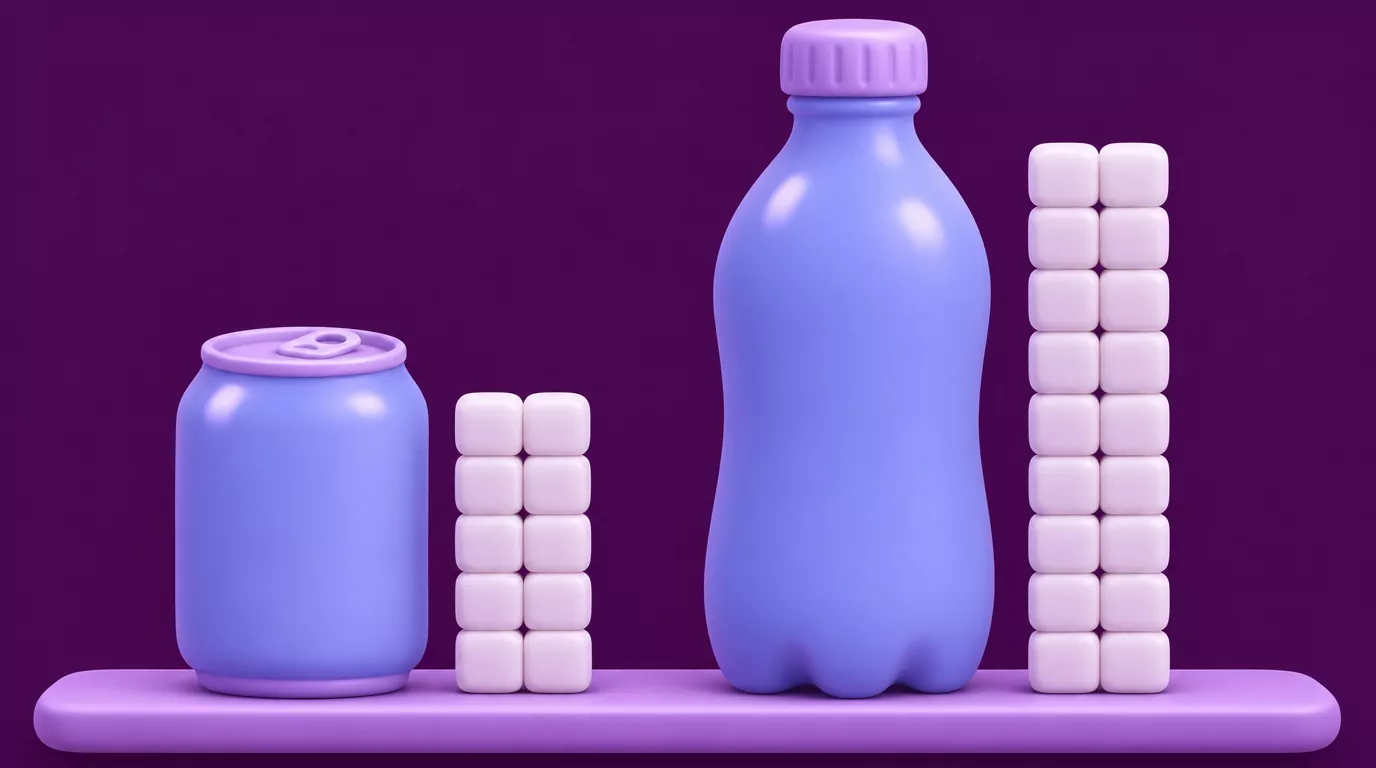
The NHS advises keeping fruit juice and smoothies to 150 ml a day in total, which is a small glass. The Sugar in Drinks Calculator totals a day of drinks by count, each at a typical standard serving. It runs in your browser, no signup.
If soda is a daily habit, this plan for how to stop drinking soda walks through a gradual step-down.
4. Serve Sweets in a Bowl, Not From the Package
Check the serving size, pour that much into a bowl and put the bag away. NIDDK and Healthline both advise against eating straight from the box or bag. A bag has no natural stopping point, but a bowl does. A plated portion is also one clear item to log, while "some from the bag" is a guess.
5. Go Smaller, Not Zero
Have half the dessert, or one scoop instead of two. Half of a 60 g brownie is about 10 g of sugar instead of about 20 g. Nothing is banned, and wanting something sweet is normal.
If cravings get in the way, these tips on how to stop craving sugar cover the why. The Sugar Swap Finder shows lower-sugar swaps with the grams you save.
6. Split Big Packs Into Single Portions When You Unpack
NIDDK suggests splitting big snack bags into single portions right away and freezing leftovers in single servings. Do the same with cookies, trail mix or a tub of ice cream.
Each small container then becomes one known entry. Work out its sugar from the label once and write it on the bag or lid, so logging takes seconds.
7. Use Smaller Bowls and Glasses for Sweet Foods
NIDDK recommends smaller dishes, bowls and glasses. The Cochrane review supports the idea, since its findings covered tableware size as well as portion and package size.
The evidence has a limit, though. The same review says it's uncertain whether shrinking portions that are already small helps as much as cutting large ones. So a smaller bowl matters most for foods you tend to overpour, like cereal or ice cream.
8. Share or Halve Restaurant Desserts
Share one dessert, ask for a smaller size or box half before you start, as NIDDK's eating-out tips suggest. Then log the half you ate, not the whole plate.
9. Measure Sauces, Syrups and Sweet Spreads With a Spoon
Free pours are where portions drift: a second tablespoon of ketchup doubles its 4 g of sugar. The same goes for syrup on pancakes, honey in yogurt and sugar in coffee. A level teaspoon of sugar is about 4.2 g, so measure your usual spoonful once and you'll know your number.
Portion Size vs Serving Size: What the Label Is Really Telling You
A portion is how much you choose to eat. A serving size is the standard amount the Nutrition Facts label uses, as NIDDK explains.
So what is a serving size, exactly? The FDA says that by law it's based on how much people typically eat, not how much they should eat. It's not a recommendation.
One package can hold several servings. Some carry dual-column labels that also show the whole package, for when you finish it in one sitting.
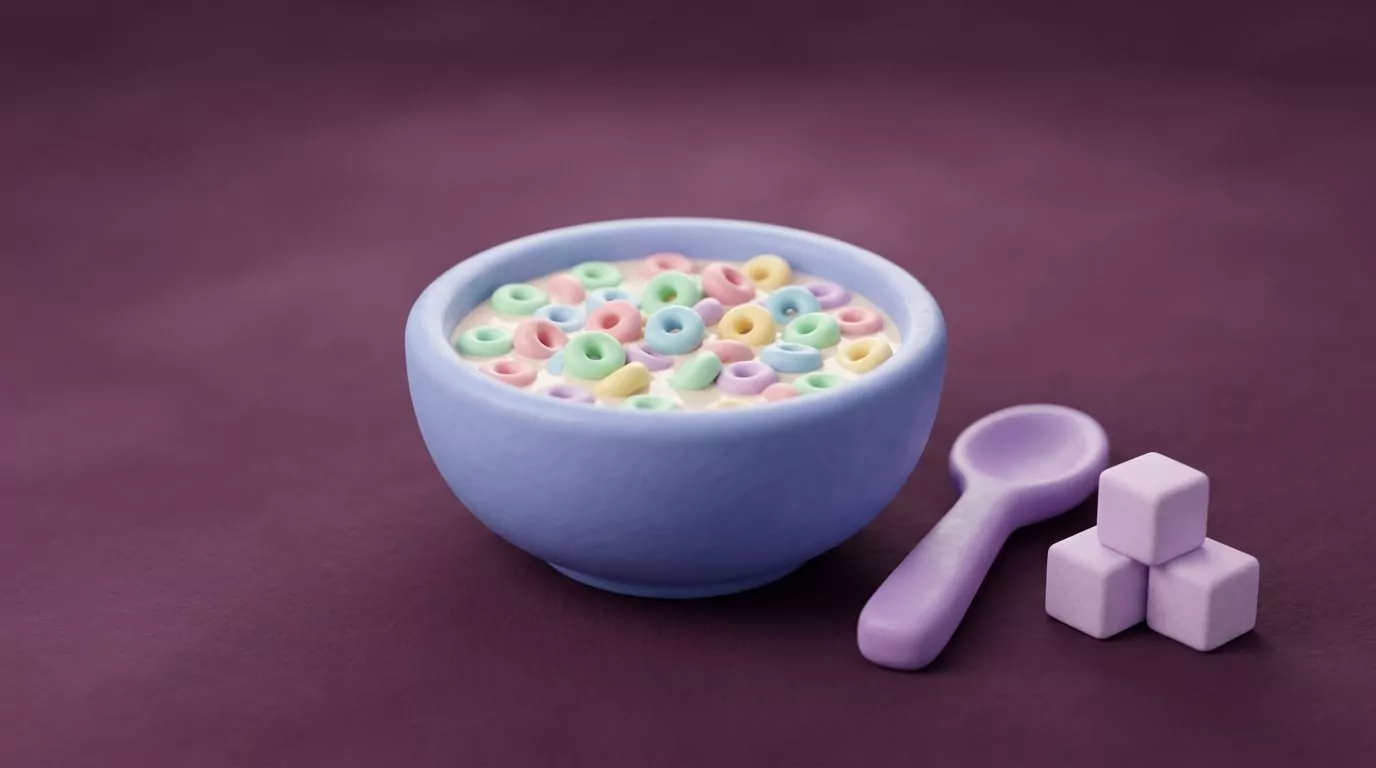
This guide to total sugars vs added sugars shows which line to read. For a worked bowl, see how sugar in breakfast cereal adds up once you pour more than the label serving.
In the UK, NHS traffic lights mark sugar red above 22.5 g per 100 g or above 27 g per portion. The Food Label Sugar Decoder turns a per 100 g figure into a rating and does the per-serving math.
How to Log the Portion You Actually Ate
The rule: log what you ate, not what the label serving says. Three steps get you there:
- Check the serving size and the servings per container on the label.
- Estimate your portion with your measured-once number or the hand check.
- Multiply the sugar per serving by the number of servings you ate: for example, 12 g of added sugar per serving × 1.5 servings = 18 g, about 4.3 teaspoons at 4.2 g per teaspoon. The Sugar Grams to Teaspoons Converter does other conversions in one step.
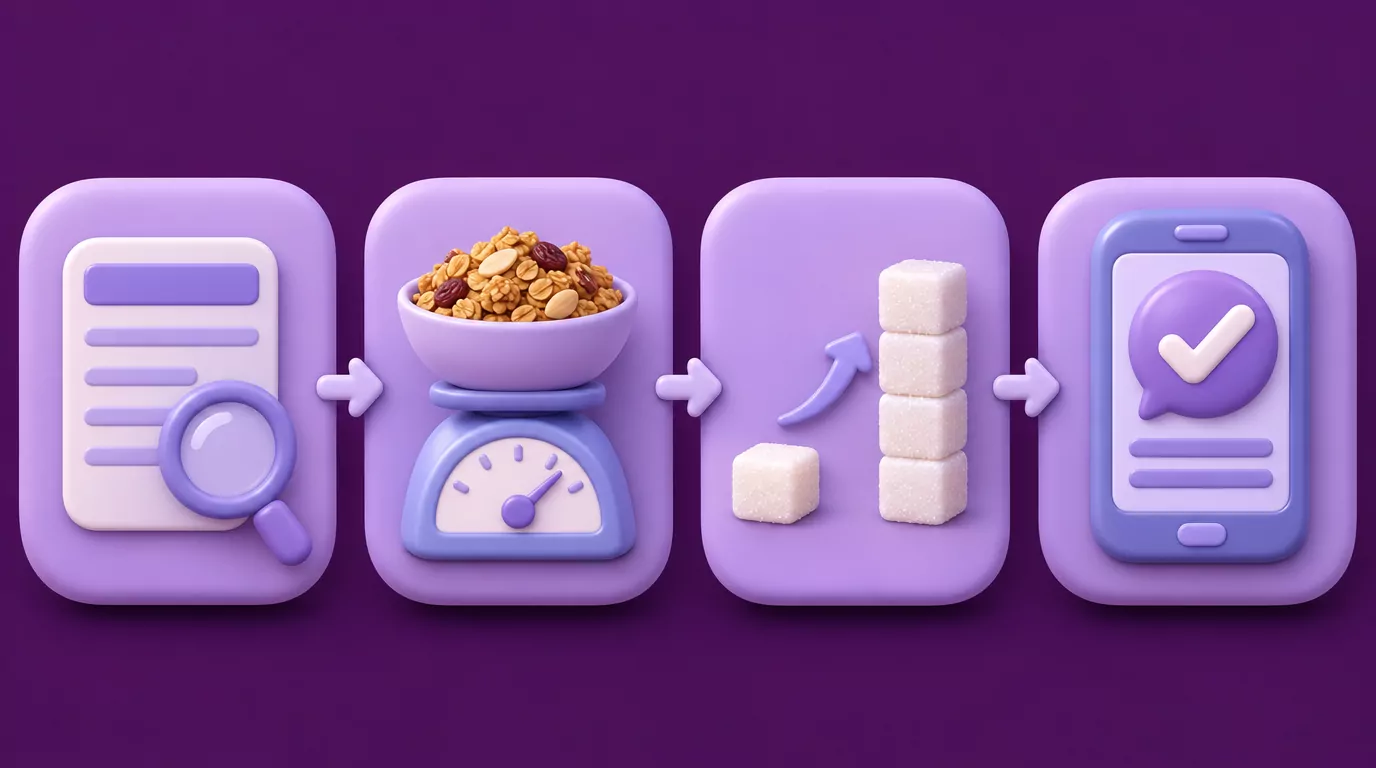
On the Printable Sugar Tracker Log, write your usual portion next to the food in the Food or drink item column, for example: granola, 70 g.
A food journal helps you estimate amounts and spot patterns in a weekly review. With habit stacking, you can tie the portion check to something you already do, like plating up.
In Sugar Tracker: Food Scanner, the portion is the part to check. Snap a photo of your plate or drink, or pick one from your photo library, and review the AI estimate of added sugar with its range and confidence. If your portion differs from what the photo shows, such as a second helping, a half-finished plate or a bigger glass, adjust the estimate before you confirm.
Nothing is logged until you confirm. Manual entry of grams works when you've already done the label math, and your log stays on your iPhone. To see why any photo estimate needs a portion check, read how a photo calorie counter works.
One Day, Two Portion Sizes: 46 to 48 g Less Sugar
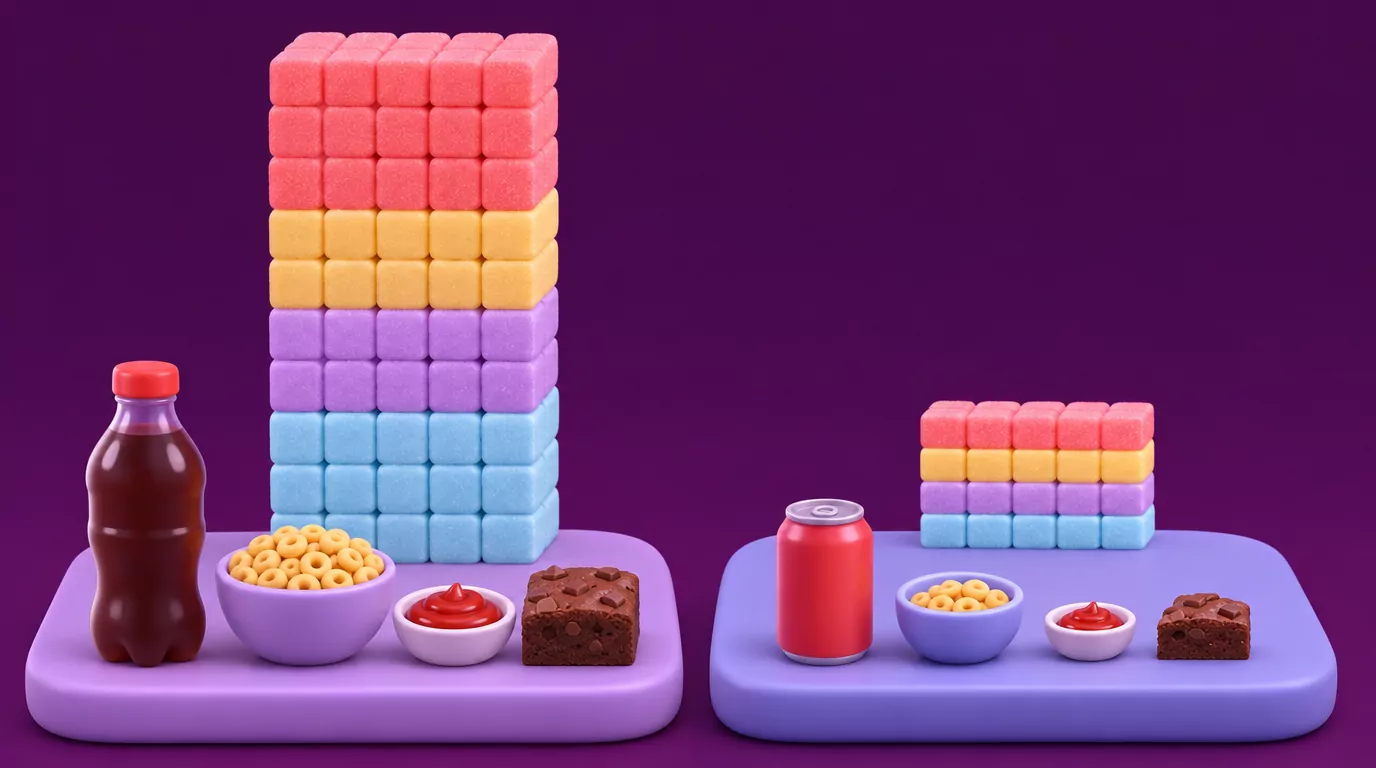
Here's one day of the same four foods at two portion sizes.
| Food | Bigger portion (g sugar) | Smaller portion (g sugar) | Difference |
|---|---|---|---|
| Cola | 20 oz bottle: 65 g | 12 oz can: 39 g | 26 g |
| Sweetened cereal (added sugar) | Real bowl: about 18 to 20 g | Label serving: about 12 g | 6 to 8 g |
| Ketchup | 2 tablespoons: about 8 g | 1 tablespoon: about 4 g | 4 g |
| Chocolate brownie | Whole 60 g brownie: about 20 g | Half a brownie: about 10 g | 10 g |
| Day total | About 111 to 113 g | About 65 g | 46 to 48 g |
Cola figures are Coca-Cola's, and the cereal figure is added sugar from the cereal guide above. Ketchup and brownie values are total sugars from typical labels in the Sugar in Food Checker, and brands vary.
The WHO suggests an ideal of 25 g a day, with a ceiling of about 50 g at 2,000 kcal. The AHA suggests no more than 25 g for women and 36 g for men. These limits apply to free and added sugars, so treat the comparison as approximate; this guide to how much sugar per day covers both.
The smaller day still lands at about 65 g, above the WHO ceiling and both AHA limits. So portion size is one lever, not the whole answer. The drink is the biggest one: it makes up 26 g of the 46 to 48 g gap, which is why tip 3 matters most.
Frequently Asked Questions
What is portion control?
Portion control means choosing how much of a food you eat, on purpose. It isn't a diet and doesn't ban foods.
What is the difference between portion size and serving size?
Portion size is the amount you actually eat. Serving size is the standard amount on the Nutrition Facts label, which the FDA says is based on what people typically eat. Your portion can be bigger or smaller than one serving.
Why is portion control important?
People eat more when they're served more, as the 2015 Cochrane review found. In the example day above, the same four foods at smaller portions came to about 65 g of sugar instead of about 111 to 113 g, with nothing banned.
Does portion control help with weight loss?
The Cochrane authors modeled that cutting larger portions, packages and tableware across the whole diet could lower daily energy intake by about 144 to 228 kcal among UK children and adults. That's a model of energy intake, not a weight-loss result.
Weight depends on many factors. For a weight goal or a health condition, talk to a doctor or registered dietitian.
How do you learn to eat smaller portions?
Eat slowly. NIDDK says it may take at least 15 minutes for your brain to register that your stomach is full, and it advises against eating in front of the TV. Beyond that, plate your food and use smaller bowls, as in tips 4 and 7.
Start With One Portion
Pick one food or drink you have every day, measure the portion once and log it for a week. A sweet drink is a good first pick, since it was the biggest lever in the example day. You'll see how much of your total comes from that one amount.
Want a personal number to compare against? Try the Daily Sugar Intake Calculator; it runs in your browser, no signup.
Sugar Tracker: Food Scanner is free to download on the App Store for iPhone (iOS 15.1 or later). Snap a photo of your next meal, check the estimate against the portion you ate, then adjust or confirm it. There is no Android version yet; Android readers can use the browser tools instead.